Ad Section

Showing posts with label healthy-food. Show all posts

Shakshuka Tunisian one-pan dish | How to Cook

Shakshuka Tunisian one-pan dish | How to Cook


Shakshuka is a Tunisian one-pan dish featuring eggs poached in a spiced tomato, onion, and pepper sauce. It’s great for a savory breakfast or when you’re looking to dress up some eggs for dinner. The beauty of shakshuka is that rather than fussing with poaching individual eggs and adding them to a dish, you poach eight eggs right in the flavorful sauce for a fully integrated meal. The key to great shakshuka is balancing the piquancy, acidity, richness, and sweetness of its ingredients. Roasted peppers make the perfect base. We finished our shakshuka with a sprinkling of bright cilantro and salty feta cheese. Jarred or homemade roasted red peppers can be substituted for the piquillo peppers. Serve with pita or crusty bread to mop up the sauce. You will need a 12-inch skillet with a tight-fitting lid for this recipe.

Ingredients


  • 3 tablespoons vegetable oil
  • 2 onions, chopped fine
  • 2 yellow bell peppers, stemmed, seeded, and cut into ¼-inch pieces
  • 4 garlic cloves, minced
  • 2 teaspoons tomato paste
  • 1 teaspoon ground cumin
  • 1 teaspoon ground turmeric
  • Salt and pepper
  • ⅛ teaspoon cayenne pepper
  • 1½ cups jarred piquillo peppers or Roasted Red Peppers, chopped coarse
  • 1 (14.5-ounce) can diced tomatoes
  • ¼ cup water
  • 2 bay leaves
  • ⅓ cup chopped fresh cilantro
  • 8 large eggs
  • 2 ounces feta cheese, crumbled (½ cup)


Cooking Procedure


  1. Heat oil in 12-inch skillet over medium-high heat until shimmering. Add onions and bell peppers and cook until softened and beginning to brown, 8 to 10 minutes. Add garlic, tomato paste, cumin, turmeric, 1½ teaspoons salt, ¼ teaspoon pepper, and cayenne and cook, stirring frequently, until tomato paste begins to darken, about 3 minutes.
  2. Stir in piquillo peppers, tomatoes and their juice, water, and bay leaves and bring to simmer. Reduce heat to medium-low and cook, stirring occasionally, until sauce is slightly thickened, 10 to 15 minutes.
  3. Off heat, discard bay leaves and stir in ¼ cup cilantro. Transfer 2 cups sauce to blender and process until smooth, about 60 seconds. Return puree to skillet and bring sauce to simmer over medium-low heat.
  4. Off heat, make 4 shallow indentations (about 2 inches wide) in surface of sauce using back of spoon. Crack 2 eggs into each indentation and season eggs with salt and pepper. Cover and cook over medium-low heat until egg whites are just set and yolks are still runny, 5 to 10 minutes. Sprinkle with feta and remaining cilantro and serve.

HOMEMADE ROASTED RED PEPPERS - A Chef's tips and trick

Sweet red bell peppers take on a whole new layer of complex, smoky flavor when roasted. Jarred roasted red peppers are definitely a convenient alternative to roasting them at home, but you can also roast your own with just a little extra effort. Our preferred method uses the broiler. Cooking times vary depending on the broiler, so watch the peppers carefully. You can substitute yellow or orange bell peppers here, but note that they roast faster than red ones; decrease the cooking time by 2 to 4 minutes. Roasted peppers make a great
topping for a pizza or addition to scrambled eggs or antipasto spread. You will need two bell peppers if you want to use them in place of the jarred piquillo peppers in this Shakshuka recipe. Store extra peppers
in the refrigerator for up to 3 days.

Roasted Red Peppers

Makes 3 cups
Adjust oven rack 2½ to 3½ inches from broiler element and heat broiler. Cut off top and bottom of 4 red bell peppers, then remove cores and stems. Slice down through sides of peppers, lay them flat on cutting board and trim away any remaining ribs. Place flattened peppers, pepper tops, and pepper bottoms skin side up on aluminum foil–lined baking sheet. Broil peppers until skin is charred and puffed but flesh is still firm, 8 to 10 minutes, rotating sheet halfway through broiling. Transfer broiled peppers to bowl, cover with plastic wrap, and let steam until skins peel off easily, 10 to 15 minutes.

How to cook Baked Eggs Florentine | DIY Style

How to cook Baked Eggs Florentine | DIY Style


Almost any food is more appealing when it comes in a neatly packaged individual serving. This recipe re-imagines eggs Florentine, with its hearty spinach and creamy sauce, as a simple baked egg dish; no tricky
poaching or last-minute assembly required. To achieve the elegant ideal of a perfect-set-white, runny-yolk egg, we added raw eggs to preheated ramekins, ensuring that the egg whites cooked before the yolks had a
chance to lose their runniness. The spinach sauce, which we used to line each ramekin, provided a buffer between the eggs and the scorching ramekin walls. Use 6-ounce ramekins with 3¼-inch diameters, measured from the inner lip. It is imperative to remove the eggs from the oven just after the whites have turned opaque but are still jiggly— carryover cooking will finish the job. We developed this recipe using a
glass baking dish; if using a metal baking pan, reduce the oven temperature to 425 degrees.

Ingredients


  • 10 ounces frozen spinach, thawed
  • 2 tablespoons unsalted butter
  • 1 large shallot, minced
  • 1 tablespoon all-purpose flour
  • ¾ cup half-and-half
  • 2 ounces Parmesan cheese, grated (1 cup)
  • Salt and pepper
  • ⅛ teaspoon dry mustard
  • ⅛ teaspoon ground nutmeg
  • Pinch cayenne pepper
  • Vegetable oil spray
  • 6 large eggs

Cooking Procedure


  1. Adjust oven rack to middle position and heat oven to 500 degrees. Transfer thawed spinach to piece of cheesecloth and squeeze firmly to remove excess water.
  2. Melt butter in medium saucepan over medium heat. Add shallot and cook, stirring occasionally, until softened, about 3 minutes. Stir in flour and cook, stirring constantly, for 1 minute. Gradually whisk in half-and-half; bring mixture to boil, whisking constantly. Simmer, whisking frequently, until thickened, 2 to 3 minutes. Remove pan from heat and stir in spinach, Parmesan, ¾ teaspoon salt, ½ teaspoon pepper, mustard, nutmeg, and cayenne.
  3. Lightly spray six 6-ounce ramekins with oil spray. Evenly divide spinach filling among ramekins. Using back of spoon, push filling 1 inch up sides of ramekins to create ⅛-inch-thick layer. Shape remaining filling in bottom of ramekin into 1½-inch-diameter mound, then make a shallow indentation in center of mound large enough to hold yolk. Place filled ramekins in 13 by 9-inch glass baking dish. Bake until filling just starts to brown, about 7 minutes, rotating dish halfway through baking.
  4. While filling is heating, crack eggs (taking care not to break yolks) into individual cups or bowls. Remove baking dish with ramekins from oven and place on wire rack. Gently pour eggs from cups into hot ramekins,
  5. centering yolk in filling. Lightly spray surface of each egg with oil spray and sprinkle each evenly with pinch salt. Return baking dish to oven and bake until whites are just opaque but still tremble (carryover heat will cook whites through), 6 to 8 minutes, rotating dish halfway through baking.
  6. Remove dish from oven and, using tongs, transfer ramekins to wire rack. Let stand until whites are firm and set (yolks should still be runny), about 10 minutes. Serve immediately.

Baked Eggs Lorraine - Variation recipe

Slice white and green parts of 1 pound leeks thin and wash thoroughly. Cook 2 slices bacon, cut into ½-inch pieces, in medium saucepan over medium heat until crisp, about 10 minutes. Transfer bacon to paper towel–lined plate. Add leeks to pan and cook until softened, about 10 minutes. Transfer leeks to plate with bacon. Proceed with recipe, omitting shallot and reducing butter to 1 tablespoon. Substitute bacon and leek mixture for spinach and ½ cup shredded Gruyère cheese for Parmesan.


WHICH FROZEN VEGETABLES ARE BEST? Chef's Idea

Frozen vegetables can be a great option; besides being convenient, vegetables are often frozen at the peak of freshness. However, some vegetables freeze better than others. As a rule, vegetables with a lower moisture content generally freeze well, while their high moisture counterparts turn mushy and develop off-flavors. (High-moisture spinach is an exception because it doesn’t need to retain its shape in most cooked dishes.) Taking that into consideration, here are the frozen vegetables we like best, as well as the ones we don’t recommend.

First-Rate: Corn, Lima Beans, Pearl Onions, Peas, and Spinach

Frozen versions of these vegetables can even be preferable to fresh versions, depending on the season.

Acceptable in Some Situations: Broccoli, Carrots, Cauliflower, and Green Beans

These are acceptable options for soups, stews, and long-cooked dishes, where their less-than-crisp texture isn’t a factor. But we always prefer fresh when these vegetables are the main component of a dish.

Just Skip: Asparagus, Bell Peppers, Mushrooms, and Snow Peas

These high-moisture vegetables do not freeze well, and you should avoid them both on their own and in frozen vegetable medleys.

How to cook Classic Cheese Omelet with a Twist

How to cook Classic Cheese Omelet with a Twist


A quick and creamy cheese omelet makes the perfect breakfast for two (or an easy dinner!), and once you master the basic technique of cooking the eggs and shaping the omelet, you can vary the filling to suit any taste. A good nonstick skillet is essential for perfectly stick-free omelets, since the eggs need to move freely so that the omelet can be folded over itself. To ensure the cheese melted before the eggs overcooked, we finely shredded it and removed the pan from the heat after adding the cheese to the eggs. The residual heat was enough to melt the cheese without overcooking the omelet. This technique gave us the results we had been looking for: moist and creamy eggs, with plenty of perfectly melted cheese. You can substitute cheddar, Monterey Jack, or any semisoft cheese for the Gruyère. Making perfect omelets takes some practice, so don’t be disappointed if your first effort fails to meet your expectations.

Ingredients


  • 6 large eggs
  • Salt and pepper
  • 1 tablespoon unsalted butter, plus 1 tablespoon melted
  • 6 tablespoons finely shredded Gruyère cheese


Cooking Procedure


  1. Place 3 eggs in small bowl, season with salt and pepper, and beat with fork until combined. Repeat with remaining 3 eggs in separate bowl.
  2. Melt 1½ teaspoons butter in 10-inch nonstick skillet over medium-high heat. Add 1 bowl of egg mixture and cook until edges begin to set, 2 or 3 seconds. Using heat-resistant rubber spatula, stir eggs in circular motion until slightly thickened, about 10 seconds. Use spatula to pull cooked edges of eggs in toward center, then tilt skillet to 1 side so that uncooked eggs run to edge of skillet. Repeat until omelet is just set but still moist on surface, 20 to 25 seconds. Sprinkle 3 tablespoons Gruyère across center of omelet.
  3. Off heat, use spatula to fold lower third (portion nearest you) of omelet over filling; press gently with spatula to secure seams, maintaining fold.
  4. Run spatula between outer edge of omelet and skillet to loosen. Pull skillet sharply toward you a few times so omelet slides up lip of far edge of pan. Use spatula to fold far edge of omelet toward center. Press to secure the seam. Invert omelet onto warm plate. Tidy edges with spatula, brush with half of melted butter, and serve immediately.
  5. Wipe out skillet and repeat with remaining 1½ teaspoons butter, remaining egg mixture, remaining 3 tablespoons Gruyère, and remaining melted butter.

Asparagus and Smoked Salmon Filling

Heat 1 teaspoon olive oil in skillet over medium-high heat until shimmering. Add 1 thinly sliced shallot and cook until softened and starting to brown, about 2 minutes. Add 5 ounces trimmed asparagus, cut on bias into ¼-inch lengths; pinch salt; and pepper to taste. Cook, stirring frequently, until asparagus is crisp-tender, 5 to 7 minutes. Transfer asparagus mixture to bowl and stir in 1 ounce chopped smoked salmon and ½ teaspoon lemon juice. Add half of filling with Gruyère in step 2 and remaining filling to second omelet with Gruyère in step 5.

Mushroom Filling

Melt 1 tablespoon unsalted butter in 10-inch skillet over medium heat. Add 1 minced small shallot and cook until softened, about 2 minutes. Add 2 ounces white mushrooms, trimmed and sliced ¼ inch thick, and cook
until lightly browned, about 3 minutes. Transfer to bowl and stir in 1 teaspoon minced fresh thyme and season with salt and pepper to taste. Add half of filling with Gruyère in step 2 and remaining filling to second
omelet with Gruyère in step 5.


Chef's Tip: TRADITIONAL VS. NONSTICK SKILLETS: WHEN TO USE
WHICH FOR WHAT?

One of the big differences between types of skillets is whether the surface is traditional or nonstick. Traditional skillets are made from materials that allow food to adhere slightly, which is ideal for creating the browned bits of fond that are the foundation of a great seared steak or pan sauce. Nonstick skillets, on the other hand, have a coating that keeps food from sticking to minimize the need for lubricating fat. This makes it easier to cook delicate foods and also facilitates cleanup (see this page for more information about types of
skillets). A nonstick skillet is particularly useful in a recipe like this one since you need to be able to move the cooked omelet around in the pan to successfully fold it; however, we don’t think you need a specially designed omelet pan for this task. We also prefer nonstick skillets for stir-fries; they’re actually better suited to this task on most home stovetops than a wok would be. Other delicate ingredients that are well suited to nonstick are fish and seafood, and lean meats like chicken, turkey, and pork (as long as you’re not making a pan sauce that requires a fond).

Tofu Scramble with Herbs | Breakfast and Brunch How to cook

Tofu Scramble with Herbs | Breakfast and Brunch How to cook

Eggs are not the only thing you can scramble (for that, see this page). Soft tofu can be cooked in a similar way to produce a quick, hearty, eggfree breakfast. When crumbled up and sautéed, the tofu yielded smooth,
creamy pieces very much like curds of scrambled egg. Tofu scramble is a great option if you’re cooking for a vegan or if you’re just looking for a change. We added a small amount of curry powder to our version for a
touch of flavor and color, plus a sautéed shallot and chopped fresh herbs. This simple preparation is perfect for a basic approach, but it’s also very easy to add other ingredients into the mix for a more substantial variation. Do not substitute firm tofu for the soft tofu in this recipe. Be sure to press the tofu completely dry before cooking.

Serves: 4
Total Time: 35 minutes

Ingredients

14 ounces soft tofu
1½ teaspoons vegetable oil
1 shallot, minced
¼ teaspoon curry powder
¾ teaspoon salt
⅛ teaspoon pepper
2 tablespoons finely chopped fresh basil, parsley, tarragon, or marjoram

Cooking Procedure

  1. Crumble tofu into ¼- to ½-inch pieces. Spread tofu on paper towel– lined baking sheet and let drain for 20 minutes, then gently press dry with paper towels.
  2. Heat oil in 10-inch nonstick skillet over medium heat until shimmering. Add shallot and cook until softened, about 2 minutes. Stir in crumbled tofu, curry powder, salt, and pepper and cook until tofu is hot, about 2 minutes. Off heat, stir in basil and serve.

Tofu Scramble with Spinach and Feta - Cooking Variation

Before adding tofu to skillet, add 4 cups baby spinach and cook until wilted, about 1 minute. Add ½ cup crumbled feta to skillet with tofu.

Tofu Scramble with Tomato, Scallions, and Parmesan - Cooking Variation

Add 1 seeded and finely chopped tomato and 1 minced garlic clove to pan with shallot; cook until tomato is no longer wet, 3 to 5 minutes. Add ¼ cup grated Parmesan and 2 tablespoons minced scallions to skillet with tofu.

Tofu Scramble with Shiitakes, Red Bell Pepper, and Goat Cheese - Cooking Variation

Before adding shallot to skillet, cook 4 ounces stemmed and thinly sliced shiitake mushrooms, 1 finely chopped small red bell pepper, and pinch red pepper flakes, covered, until mushrooms have released their liquid, about 5 minutes. Uncover, add shallot, and continue to cook until mushrooms are dry and shallot is softened, about 2 minutes. Add ¼ cup crumbled goat cheese to skillet with tofu.

REDEEMING TOFU - Chef's Tips and Trick

To many people, tofu is the quintessential tasteless, unappealing health food: the punch line of a million vegan jokes and probably to be avoided at all costs. But we want to change the way you think about this maligned ingredient, and that starts with understanding exactly what it is and how to make it shine in recipes.

Tofu comes in a variety of textures based on how much liquid has been pressed out of the soy curds: silken, soft, medium-firm, firm, and extra-firm. In general, firmer varieties maintain their shape when cooking, while softer varieties do not. We prefer extra-firm or firm tofu for stir-fries and noodle dishes, as they hold together during high heat cooking and when tossed with noodles. These two varieties of tofu are also great marinated (they absorb marinade better than softer varieties) or tossed raw into salads—try our Marinated Tofu and Vegetable Salad. Medium and soft tofu boast a creamy texture; we love to pan-fry them (see this page). The crispy crust that develops makes a nice textural contrast to the silky interior. Soft tofu is also great scrambled like eggs, as in this recipe. Silken tofu has a soft, ultra-creamy texture and is often used as a base for smoothies and dips, in desserts such as puddings, or as an egg replacement in vegan baked goods.

DIY All-Morning Energy Bars | All nuts Chef's best Ideas

DIY All-Morning Energy Bars | All nuts Chef's best Ideas


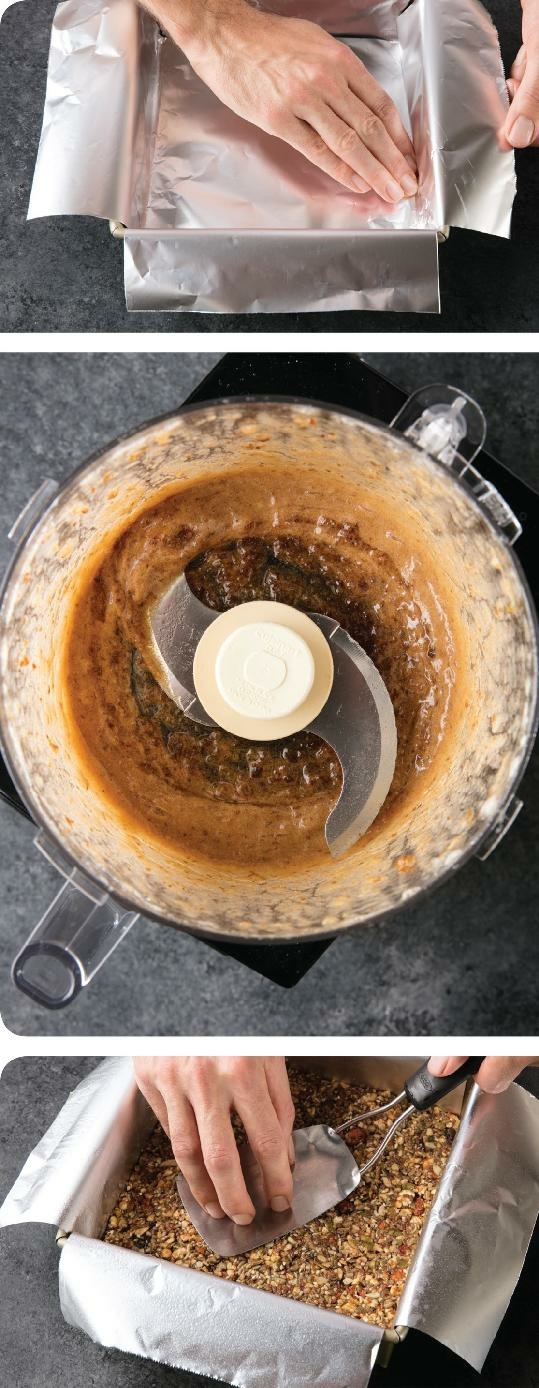
Sometimes you can’t avoid eating breakfast on the run, but that doesn’t mean you have to resort to something that tastes bad or won’t nourish you. We wanted our homemade energy bars to be full of hearty, nutritious nuts and seeds. Toasting the nuts and seeds before pulsing them in the food processor gave the bars a pleasant roasted flavor. Dates and maple syrup not only added satisfying sweetness but also aided in binding the bars together. We found that processing some of the dates with the maple syrup, warm water, and an egg white gave the bars a slight chew while still allowing the nuts and seeds to remain crisp. We stirred the remaining chopped dates into the mixture for textural contrast; tasters also liked the little bursts of sweetness. A two-step baking process gave us bars with the perfect balance of crunchiness and chewiness. Be sure not to overbake the nuts and seeds in step 2; they will continue to toast while the bars bake.

Ingredients

½ cup whole raw almonds
½ cup raw cashews
⅓ cup raw pepitas
¼ cup raw sunflower seeds
2 tablespoons flaxseeds
1 tablespoon sesame seeds
3 ounces pitted dates, chopped (½ cup)
2 tablespoons warm tap water
2 tablespoons maple syrup
1 large egg white
¾ teaspoon kosher salt

Cooking Procedure


  1. Adjust oven rack to middle position and heat oven to 300 degrees. Line baking sheet with aluminum foil. Make foil sling for 8-sinch square baking pan by folding 2 long sheets of aluminum foil so each is 8 inches wide. Lay sheets of foil in pan perpendicular to each other, with extra foil hanging over edges of pan. Push foil into corners and up sides of pan, smoothing foil flush to pan. Grease foil with vegetable oil spray.
  2. Spread almonds, cashews, pepitas, sunflower seeds, flaxseeds, and sesame seeds on prepared baking sheet. Bake, stirring occasionally, until pale golden and fragrant, 15 to 20 minutes. Transfer nut mixture to food processor and let cool slightly, then pulse until coarsely chopped, about 5 pulses; transfer to large bowl.
  3. Process ¼ cup dates, warm water, maple syrup, egg white, and salt in now-empty processor until smooth, about 30 seconds, scraping down sides of bowl with rubber spatula as needed. Stir processed date mixture and remaining ¼ cup chopped dates into nut mixture until well combined. Spread mixture in prepared baking pan and press firmly into even layer using greased metal spatula. Bake until golden brown, 20 to 25 minutes, rotating pan halfway through baking. Do not turn off oven.
  4. Let bars cool in pan for 15 minutes. Using foil overhang, lift bars out of pan; transfer to cutting board and cut into 10 bars. Space bars evenly on parchment paper–lined baking sheet and bake until deep golden brown, 10 to 15 minutes. Let bars cool completely on wire rack, about 1 hour. Serve. (Bars can be stored at room temperature for up to 1 week.)


GETTING SEEDY - Chef's secret style

You may think seeds belong in the garden, but one look around a wellstocked kitchen proves otherwise. We use them to lend richness, protein, and crunch to baked goods, salads, and more. They will keep for months in a bag in the freezer, making them a reliable pantry staple.

Chia Seeds

Mild, nutty chia seeds are a popular health food due to their high fiber content. The seeds can be used dry, ground and used as a powder, or combined with water to create a tapioca-like gel.

Flaxseeds

Flaxseeds can be toasted, sprouted, or ground; they’re most easily digested when eaten ground. We prefer the milder flavor of golden flaxseeds, but you can use brown and golden varieties interchangeably. Flaxseeds have a wheaty, earthy flavor, making them a nice addition to whole-grain breads. Store them in the refrigerator or freezer.

Poppy Seeds

Poppy seeds are used for their peppery, smoky-sweet flavor. Try them in baked goods, coleslaw, egg noodles, and salad dressing.

Pumpkin Seeds

Whole white pumpkin seeds are sold for snacking and have a pleasant vegetal taste, but we usually turn to green hulled pumpkin seeds (pepitas). Toss them in salads or try them in these energy bars.

Sesame Seeds

Sesame seeds add a nutty, subtle flavor to both sweet and savory recipes. They star in our Sesame Noodles with Shredded Chicken, where we grind them into a rich paste.

Sunflower Seeds

Sunflower seeds are mildly sweet and creamy. They are usually sold hulled, but if you buy them unhulled, make sure to remove the blackand- white shells. Try them in salads and bowls such as our Buckwheat Bowls with Snow Peas, Avocado, and Yogurt Sauce).

Almond Granola with Dried Fruit | perfect for Breakfast

Almond Granola with Dried Fruit | perfect for Breakfast


Store-bought granola suffers from many shortcomings. It’s often loose and gravelly and/or infuriatingly expensive, and it never has exactly the balance of ingredients that you wish it had. We wanted to make our own granola at home, with big, satisfying clusters and a crisp texture. The secret was to firmly pack the granola mixture into a rimmed baking sheet before baking. Once it was baked, we had a granola “bark” that we could break into crunchy clumps of any size. We liked using maple syrup as a sweetener for its mild character, especially when balanced with the molasses notes of light brown sugar. The best way to incorporate dried fruit was to keep it away from the heat altogether, stirring it in once the granola was cool. Do not substitute quick or instant oats.

Ingredients


  • ⅓ cup maple syrup
  • ⅓ cup packed (2⅓ ounces) light brown sugar
  • 4 teaspoons vanilla extract
  • ½ teaspoon salt
  • ½ cup vegetable oil
  • 5 cups (15 ounces) old-fashioned rolled oats
  • 2 cups (10 ounces) whole almonds, chopped coarse
  • 2 cups (10 ounces) raisins or other dried fruit, chopped

Cooking Procedure


  1. Adjust oven rack to upper-middle position and heat oven to 325 degrees. Line rimmed baking sheet with parchment paper.
  2. Whisk maple syrup, sugar, vanilla, and salt together in large bowl. Whisk oil into maple syrup mixture, then fold in oats and almonds until thoroughly coated.
  3. Transfer oat mixture to prepared sheet and spread into thin, even layer (about ⅜ inch thick). Using stiff metal spatula, compress oat mixture until very compact. Bake until lightly browned, 40 to 45 minutes, rotating sheet halfway through baking. Transfer sheet to wire rack and let cool completely, about 1 hour. Break granola into pieces of desired size. Stir in raisins. (Granola can be stored at room temperature for up to 2 weeks.)

Hazelnut Granola with Dried Pear - Cooking Variation

Substitute skinned and coarsely chopped toasted hazelnuts for almonds. Use 2 cups chopped dried pear for dried fruit.

Pecan-Orange Granola with Dried Cranberries - Cooking Variation

Add 2 tablespoons finely grated orange zest and 2½ teaspoons ground cinnamon to maple syrup mixture in step 2. Substitute coarsely chopped pecans for almonds. Use 2 cups dried cranberries for dried fruit.

Spiced Walnut Granola with Dried Apple - Cooking Variation

Add 2 teaspoons ground cinnamon, 1½ teaspoons ground ginger, ¾ teaspoon ground allspice, ½ teaspoon ground nutmeg, and ½ teaspoon pepper to maple syrup mixture in step 2. Substitute coarsely chopped walnuts for almonds. Use 2 cups chopped dried apple for dried fruit.

Tropical Granola with Dried Mango - Cooking Variation

Decrease vanilla extract to 2 teaspoons and add 1½ teaspoons ground ginger and ¾ teaspoon ground nutmeg to maple syrup mixture in step 2. Substitute coarsely chopped macadamia nuts for almonds and 1½ cups unsweetened shredded coconut for 1 cup oats. Use 2 cups chopped dried mango or pineapple for dried fruit.

DIY GRANOLA - In a Chef's mind

Our basic recipe is very adaptable; just keep a few rules in mind as you mix and match.
The Base
The ratio of oats to other ingredients in our granola is slightly more than 1:1 by volume. You want a bit more base than mix-ins, but that base doesn’t have to be just oats; try replacing 1 cup of the oats with 1–1½ cups unsweetened shredded coconut or even quinoa flakes.
The Nuts
Almost any type of nuts will work. We like chopped nuts for a more even distribution, but if you choose a smaller nut or like the texture of bigger pieces, try whole nuts. Or replace half of the nuts with seeds.
The Oil
Fat is essential for a substantial, crisp texture. Fat and liquid sweeteners form a fluid emulsion that thoroughly coats ingredients, creating crunch as the granola bakes. Without any fat, the texture is bound to be dry and fragile. We prefer the neutral taste of vegetable oil.
The Fruit
Dried fruit has already had most of its moisture pulled out, so exposing it to the heat of the oven is going to turn it leathery and overcooked. Save the fruit to add after cooking the other ingredients.
The Salt
Don’t skip the salt! A half teaspoon may not seem like much, but it adds essential depth of flavor, accenting both the sweet and savory, toasted elements of the granola.

Healthy Quinoa Pilaf with Herbs and Lemon - How to make your own quinoa at home

Healthy Quinoa Pilaf with Herbs and Lemon - How to make your own quinoa at home


While in theory this “supergrain” should be appealingly nutty and crunchy, cooked quinoa often ends up a mushy mess with washed-out flavor and an underlying bitterness. For a simple quinoa pilaf with light, distinct grains and great flavor, we used less water than most quinoa recipes to avoid any mushiness. We also toasted the quinoa to develop its natural nuttiness before simmering. We flavored our pilaf with onion sautéed in fat and finished it with herbs and a squeeze of lemon juice. Quinoa is also easily adapted to a variety of other flavor profiles as in the variations. We like the convenience of prewashed quinoa; rinsing removes the quinoa’s bitter protective coating (called saponin). If you buy unwashed quinoa (or if you are unsure whether it’s washed), rinse it and then spread it out over a clean dish towel to dry for 15 minutes before cooking.

Ingredients


  • 1½ cups prewashed white quinoa
  • 2 tablespoons unsalted butter or extra-virgin olive oil
  • 1 small onion, chopped fine
  • ¾ teaspoon salt
  • 1¾ cups water
  • 3 tablespoons chopped fresh cilantro, parsley, chives, mint, or tarragon
  • 1 tablespoon lemon juice

  1. Toast quinoa in medium saucepan over medium-high heat, stirring frequently, until quinoa is very fragrant and makes continuous popping sound, 5 to 7 minutes; transfer to bowl.
  2. Melt butter in now-empty saucepan over medium-low heat. Add onion and salt and cook until onion is softened and light golden, 5 to 7 minutes. Stir in water and toasted quinoa, increase heat to medium-high, and bring to simmer. Cover, reduce heat to low, and simmer until grains are just tender and liquid is absorbed, 18 to 20 minutes, stirring once halfway through cooking.
  3. Remove saucepan from heat and let sit, covered, for 10 minutes. Fluff quinoa with fork, stir in herbs and lemon juice, and serve.

Variations

Quinoa Pilaf with Goat Cheese and Chives

Substitute 4 minced garlic cloves for onion; cook until fragrant, about 30 seconds, before adding toasted quinoa. Use chives for chopped herbs. Sprinkle with ½ cup crumbled goat cheese before serving.

Quinoa Pilaf with Olives, Raisins, and Cilantro

Add ¼ teaspoon ground cumin, ¼ teaspoon dried oregano, and ⅛ teaspoon ground cinnamon to saucepan with onion. Stir in ¼ cup golden raisins halfway through cooking quinoa. Substitute ⅓ cup coarsely chopped pimento-stuffed green olives and 3 tablespoons chopped fresh cilantro for chopped fresh herbs, and 4 teaspoons red wine vinegar for lemon juice.

Quinoa Pilaf with Apricots, Aged Gouda, and Pistachios

Add ½ teaspoon grated lemon zest, ½ teaspoon ground coriander, ¼ teaspoon ground cumin, and ⅛ teaspoon pepper to saucepan with onion. Stir in ½ cup coarsely chopped dried apricots before letting quinoa sit for 10 minutes in step 3. Substitute ½ cup shredded aged gouda; ½ cup shelled pistachios, toasted and chopped coarse; and 2 tablespoons chopped fresh mint for herbs.

WHAT IS A PILAF?

You may associate pilaf with rice, but the pilaf method can be used to cook any grain. It is a simple but elegant approach where the grain is toasted before being simmered slowly in liquid until it’s tender and superflavorful. We use the pilaf method for many grains, including rice, bulgur, quinoa, barley, and millet, as well as pasta and couscous. It produces grains with a light, fluffy texture and an extra layer of nutty, toasted flavor that you don’t get from just boiling the grains. Many pilaf recipes also add sautéed aromatics like onion, garlic, or shallot to the grain for an extra-flavorful dish. Other ways to build complex flavor in this simple preparation include swapping in chicken broth for water and stirring in chopped fresh herbs, dried fruit, cheese, or other additions before serving, as in the variations here. Make sure you use a sturdy, heavy-bottomed saucepan with a tight-fitting lid for any pilaf recipe so the rice or grain will cook evenly and not scorch or stick to the pan.

Crispy Tofu Fingers with Sweet Chili Sauce - Chefs secret in cooking

Crispy Tofu Fingers with Sweet Chili Sauce - Chefs secret in cooking


Pan frying is one of our favorite ways to prepare tofu. It becomes crispy on the outside and creamy within, perfect for dipping into a sauce, as we do here, or adding to salads (see the variation). To ensure the tofu got
nice and crisp, we first drained it thoroughly. A coating of cornstarch and cornmeal gave us a crunchy, golden-brown crust that paired perfectly with a quick spicy-sweet chili sauce. We prefer the softer, creamier
texture of soft tofu here for the perfect contrast between creamy interior and crispy exterior. Medium-firm, firm, or extra-firm tofu will also work, but will taste drier. You can find Asian chili-garlic sauce in Asian markets or the international aisle of most supermarkets. Be sure to handle the tofu gently and pat it dry thoroughly before seasoning and coating.

Serves: 4
Total Time: 45 minutes

Ingredients

28 ounces soft tofu
4 teaspoons plus ¾ cup cornstarch
½ cup water
½ cup rice vinegar
6 tablespoons sugar
2 tablespoons Asian chili-garlic sauce
¼ cup cornmeal
Salt and pepper
¾ cup vegetable oil

Procedure


  1. Slice tofu crosswise into ¾-inch-thick slabs, then slice each slab into 3 fingers. Arrange tofu on paper towel–lined baking sheet and let sit for 20 minutes to drain, then gently pat tofu dry with paper towels.
  2. Meanwhile, whisk 4 teaspoons cornstarch, water, vinegar, sugar, and chili-garlic sauce together in small saucepan. Bring to simmer over medium-high heat and cook, whisking constantly, until thickened, about 4 minutes. Remove sauce from heat and cover to keep warm.
  3. Set wire rack in rimmed baking sheet. Combine remaining ¾ cup cornstarch and cornmeal in shallow dish. Season tofu with salt and pepper. Coat tofu thoroughly with cornstarch mixture a few pieces at a time, pressing gently to adhere. Transfer to prepared rack.
  4. Heat oil in 12-inch nonstick skillet over medium-high heat until shimmering. Working in 2 batches, fry tofu, turning as needed, until crisp and golden on all sides, about 4 minutes. Gently lift tofu from oil, letting excess oil drip back into skillet, and transfer to paper towel–lined plate to drain. Serve with sauce.


Variation

Crispy Tofu and Warm Cabbage Salad

Skip step 2, omitting dipping sauce. Instead, whisk 3 tablespoons vegetable oil, 5 tablespoons rice vinegar, 2 tablespoons soy sauce, 2 tablespoons sugar, and 1–2 teaspoons Asian chili-garlic sauce in bowl, cover, and microwave until simmering, 1 to 2 minutes. Reserve 2 tablespoons dressing and toss remainder with 1 (14-ounce) bag green coleslaw mix, ¾ cup chopped dry-roasted peanuts, 4 thinly sliced scallions, ½ cup fresh cilantro leaves, and ½ cup chopped fresh mint. Drizzle tofu with reserved dressing; serve with salad.

SECRETS OF TERRIFIC TOFU

Most tofu comes stored in water, and since it’s quite porous, it needs to be drained before cooking. You could just pat tofu dry, but taking time to drain it for 20 minutes removes excess moisture that can make dishes bland and watery. Plus, the more water you remove, the more flavor the tofu can soak up from sauces or other ingredients added during cooking. Coating the tofu in cornstarch helps absorb exuded moisture and ensures a crispy exterior and better browning. As an ingredient, tofu takes to a wide variety of preparations. Crispy tofu stars in our Farro Bowls with Tofu, Mushrooms, and Spinach, and Tofu Banh Mi. We scramble it like eggs in Tofu Scramble with Herbs, and stir-fry it to make Stir-Fried Tofu and Bok Choy and Spicy Tofu and Basil Lettuce Cups. It even tastes great raw if marinated first in a flavorful dressing, as in our Marinated Tofu and Vegetable Salad.

Delightful Tofu Scramble with Herbs - Make your own at Home

Delightful Tofu Scramble with Herbs - Make your own at Home


Eggs are not the only thing you can scramble (for that, see this page).Soft tofu can be cooked in a similar way to produce a quick, hearty, egg free breakfast. When crumbled up and sautéed, the tofu yielded smooth, creamy pieces very much like curds of scrambled egg. Tofu scramble is a great option if you’re cooking for a vegan or if you’re just looking for a change. We added a small amount of curry powder to our version for a touch of flavor and color, plus a sautéed shallot and chopped fresh herbs. This simple preparation is perfect for a basic approach, but it’s also very easy to add other ingredients into the mix for a more substantial variation. Do not substitute firm tofu for the soft tofu in this recipe. Be sure to press the tofu completely dry before cooking.

Ingredients
14 ounces soft tofu
1½ teaspoons vegetable oil
1 shallot, minced
¼ teaspoon curry powder
¾ teaspoon salt
⅛ teaspoon pepper
2 tablespoons finely chopped fresh basil, parsley, tarragon, or marjoram

Procedure


  1. Crumble tofu into ¼- to ½-inch pieces. Spread tofu on paper towel–lined baking sheet and let drain for 20 minutes, then gently press dry with paper towels.
  2. Heat oil in 10-inch nonstick skillet over medium heat until shimmering. Add shallot and cook until softened, about 2 minutes. Stir in crumbled tofu, curry powder, salt, and pepper and cook until tofu is hot, about 2 minutes. Off heat, stir in basil and serve.


Variations


Tofu Scramble with Spinach and Feta

Before adding tofu to skillet, add 4 cups baby spinach and cook until wilted, about 1 minute. Add ½ cup crumbled feta to skillet with tofu. Tofu Scramble with Tomato, Scallions, and Parmesan. Add 1 seeded and finely chopped tomato and 1 minced garlic clove to pan with shallot; cook until tomato is no longer wet, 3 to 5 minutes. Add ¼ cup grated Parmesan and 2 tablespoons minced scallions to skillet with tofu.

Tofu Scramble with Shiitakes, Red Bell Pepper, and Goat Cheese

Before adding shallot to skillet, cook 4 ounces stemmed and thinly sliced shiitake mushrooms, 1 finely chopped small red bell pepper, and pinch red pepper flakes, covered, until mushrooms have released their liquid, about 5 minutes. Uncover, add shallot, and continue to cook until mushrooms are dry and shallot is softened, about 2 minutes. Add ¼ cup crumbled goat cheese to skillet with tofu.

REDEEMING TOFU

To many people, tofu is the quintessential tasteless, unappealing health food: the punch line of a million vegan jokes and probably to be avoided at all costs. But we want to change the way you think about this maligned ingredient, and that starts with understanding exactly what it is and how to make it shine in recipes. Tofu comes in a variety of textures based on how much liquid has been pressed out of the soy curds: silken, soft, medium-firm, firm, and extra-firm. In general, firmer varieties maintain their shape when cooking, while softer varieties do not. We prefer extra-firm or firm tofu for stir-fries and noodle dishes, as they hold together during high heat cooking and when tossed with noodles. These two varieties of tofu are also great marinated (they absorb marinade better than softer varieties) or tossed raw into salads—try our Marinated Tofu and
Vegetable Salad. Medium and soft tofu boast a creamy texture; we love to pan-fry them. The crispy crust that develops makes a nice textural contrast to the silky interior. Soft tofu is also great scrambled like eggs, as in this recipe. Silken tofu has a soft, ultracreamy texture and is often used as a base for smoothies and dips, in desserts such as puddings, or as an egg replacement in vegan baked goods.

How to Cook Perfect Scrambled Eggs - The easy trick in cooking

How to Cook Perfect Scrambled Eggs - The easy trick in cooking


Turning out rich and creamy—not dry and rubbery—scrambled eggs makes the simplest of all meals something special. Adding a couple extra yolks and ¼ cup half-and-half ensures rich flavor, and the added fat prevents overcooking, as does seasoning the raw eggs with salt, which tenderizes them. To create large, even curds, we used a smaller (10-inch) skillet so we’d have a thicker layer of eggs. Stirring constantly (scraping along both the sides and bottom) helped the eggs coagulate evenly, and dropping the heat partway through gave us more control over doneness. Follow the visual cues, as pan thickness will affect cooking times. (If using an electric stove, heat one burner on low and a second on medium-high; move the skillet between burners for temperature adjustment.) To dress up the eggs, add 2 tablespoons minced fresh parsley, chives, basil, or cilantro, or 1 tablespoon minced fresh dill or tarragon after reducing the heat to low.

Serves: 4
Total Time: 10 minutes

Ingredients

8 large eggs plus 2 large yolks
¼ cup half-and-half
Salt and pepper
1 tablespoon unsalted butter, chilled

Procedure


  1. Beat eggs, yolks, half-and-half, ⅜ teaspoon salt, and ¼ teaspoon pepper with fork until eggs are thoroughly combined and color is pure yellow; do not overbeat.
  2. Heat butter in 10-inch nonstick skillet over medium-high heat until foaming just subsides (butter should not brown), swirling to coat pan. Add egg mixture and, using rubber spatula, constantly and firmly scrape along bottom and sides of skillet until eggs begin to clump and spatula just leaves trail on bottom of pan, 1½ to 2½ minutes. Reduce heat to low and gently but constantly fold eggs until clumped and just slightly wet, 30 to 60 seconds. Immediately transfer eggs to warmed plates and season with salt to taste. Serve immediately.

Variations

Perfect Scrambled Eggs for Two

Use 4 large eggs plus 1 large yolk, 2 tablespoons half-and-half, ⅛ teaspoon salt, ⅛ teaspoon pepper, and 1½ teaspoons butter. Cook eggs in 8-inch skillet for 45 to 75 seconds over medium-high heat and then 30 to 60 seconds over low heat.

Perfect Scrambled Eggs for One

Use 2 large eggs plus 1 large yolk, 1 tablespoon half-and-half, pinch salt, pinch pepper, and ¾ teaspoon butter. Cook eggs in 8-inch skillet for 30 to 60 seconds over medium-high heat and then 30 to 60 seconds over low heat.

Smoked Salmon Scrambled Eggs with Chive Butter

Mash 3 tablespoons softened unsalted butter with 3 tablespoons minced fresh chives. Toast 4 (1-inch-thick) slices rustic white bread, then spread with 2 tablespoons chive butter. Cook eggs as directed, using remaining chive butter. Immediately spoon eggs on top of buttered toasts, top with 3 ounces smoked salmon, and serve. Garnish with extra chives if desired.

THE CLEANEST BREAK

There are best practices for even the simplest kitchen tasks. For example: cracking an egg. Do it thoughtlessly and you’ll end up with annoying bits of shell in the bowl. For the cleanest break, crack eggs
against a flat surface, rather than the edge of the counter or a mixing bowl. Once you can crack an egg correctly, separating them is easy. We separate eggs if we need just the yolk or white (as in our scrambled
eggs, which uses additional yolks) or if the two will be used in different ways. Separate eggs when they’re cold: Cold yolks are less apt to break into the whites. To separate an egg, hold the halves of the cracked shell over a bowl and gently transfer the yolk back and forth between them, letting the white fall into the bowl; drop the yolk into a second bowl. (Alternatively, open the cracked egg into your cupped palm and slowly separate your fingers to allow the white to slide into the bowl, leaving the yolk intact in your palm.) If you plan on whipping the egg whites, use three bowls: Separate each egg over the first bowl and let the white fall in. Slide the yolk into the second bowl and then move the white to the third bowl before starting over with the next egg. That way, if one yolk breaks into the white, it doesn’t contaminate the whole batch of whites. Even the tiniest amount of fat from the egg yolks can undermine the stability of the beaten whites.

Farro Bowls with Tofu, Mushrooms, and Spinach - Make your own at home

Farro Bowls with Tofu, Mushrooms, and Spinach - Make your own at home


At the base of this bowl is hearty, nutty farro. Farro is traditionally associated with Italy and flavor profiles of the western Mediterranean, but we thought it would stand up well to bold Asian ingredients, so we built a bowl to test that theory. For toppings, we chose crispy seared tofu planks along with simply sautéed mushrooms, shallot, and spinach. We partnered these easy-to-prepare toppings with a potent miso-ginger
sauce. The pairing of the farro with the zing of the Asian ingredients turned out to be a match made in grain bowl heaven. We prefer the flavor and texture of whole-grain farro; pearled farro can be used, but the texture may be softer. We found a wide range of cooking times among various brands of farro, so start checking for doneness after 10 minutes. Do not use quick-cooking farro in this recipe.

Ingredients

MISO-GINGER SAUCE
¼ cup mayonnaise
3 tablespoons red miso
2 tablespoons water
1 tablespoon maple syrup
1 tablespoon toasted sesame oil
1½ teaspoons sherry vinegar
1½ teaspoons grated fresh ginger
FARRO BOWLS
1½ cups whole farro
Salt and pepper
2 teaspoons toasted sesame oil
1 teaspoon sherry vinegar
14 ounces firm tofu, sliced crosswise into 8 equal slabs
⅓ cup cornstarch
¼ cup vegetable oil, plus extra as needed
10 ounces cremini mushrooms, trimmed and chopped coarse
1 shallot, minced
2 tablespoons dry sherry
10 ounces (10 cups) baby spinach
2 scallions, sliced thin

Procedure


  1. FOR THE SAUCE Whisk all ingredients in bowl until well combined. Set aside.
  2. FOR THE BOWLS Bring 4 quarts water to boil in Dutch oven. Stir in farro and 1 tablespoon salt, return to boil, and cook until grains are tender with slight chew, 15 to 30 minutes. Drain farro and return to now empty pot. Drizzle with sesame oil and vinegar, toss to coat, and cover to keep warm.
  3. While farro cooks, spread tofu on paper towel–lined baking sheet and let drain for 20 minutes. Gently press dry with paper towels and season with salt and pepper.
  4. Spread cornstarch in shallow dish. Coat tofu thoroughly in cornstarch, pressing gently to adhere; transfer to plate. Heat 1 tablespoon vegetable oil in 12-inch nonstick skillet over medium-high heat until just smoking. Add tofu and cook until both sides are crisp and browned, about 4 minutes per side, adding more oil as necessary to prevent charring. Transfer to paper towel–lined plate to drain and tent with aluminum foil.
  5. In now-empty skillet, heat 2 tablespoons vegetable oil over medium-high heat until shimmering. Stir in mushrooms, shallot, and ⅛ teaspoon salt and cook until vegetables begin to brown, 5 to 8 minutes. Stir in sherry and cook, scraping up any browned bits, until skillet is nearly dry, about 1 minute; transfer to bowl.
  6. Heat remaining 1 tablespoon vegetable oil over medium-high heat in now-empty skillet until shimmering. Add spinach, 1 handful at a time, and cook until just wilted, about 1 minute.
  7. Divide farro among individual bowls, then top each bowl with tofu, mushrooms, and spinach. Drizzle with miso-ginger sauce, sprinkle with scallions, and serve.

MISO PRIMER

An essential ingredient in the Japanese kitchen, miso paste is made by fermenting soybeans and sometimes grains (such as rice, barley, or rye) with a mold called koji. Packed with savory flavor, miso is used to season everything from soups and braises to dressings and sauces. Although countless variations of miso are available, three common types are white shiro (despite its name, this miso is light golden in color), red aka, and brownish-black hatcho. Flavor profiles are altered by changing the type of grain in the mix, adjusting the ratio of grain to soybeans, tweaking the amounts of salt and mold, and extending or decreasing the fermentation time, which can range from a few weeks to a few years.

White miso is mild and sweet, red miso nicely balances salty and sweet, and black miso is strong and complex. Though flavor nuances will vary from brand to brand, if you’re looking to keep just one type of
miso on hand, moderately salty-sweet red miso (which is called for in the Miso-Ginger Sauce in this recipe) is a good all-purpose choice. Miso will easily keep for up to a year in the refrigerator (some sources say it keeps indefinitely).

White Beans with Tomatoes, Garlic, and Sage - make your own with a twist

White Beans with Tomatoes, Garlic, and Sage - make your own with a twist


Dried beans come in a range of color, shapes, and sizes, with flavors from earthy to nutty. They have a far superior texture and better flavor than canned beans, but while it’s not difficult to cook dried beans, it does
take some time. For a simple but hearty bean recipe, we started by giving dried white beans a gentle simmer on the stove and then letting them sit off heat to finish cooking for a perfectly creamy texture. Onion, carrot,
and bay leaves simmered with the beans to help impart a subtle flavor. Simmering a whole head of garlic also gave us softened cloves with a mild, sweet garlic flavor that we then stirred into the beans. Sautéing more garlic and sage in olive oil before adding tomatoes gave us a potently flavored base. Adding the cooked beans and simmering let the traditional Italian flavors meld into a simple and satisfying dish.

Ingredients


  • 1 pound (2½ cups) dried cannellini, great Northern, or navy beans, rinsed and picked over to remove any small stones and beans that are broken or shriveled
  • 1 onion, unpeeled and halved through root end
  • 1 carrot, cut into 2-inch lengths
  • 1 garlic head, outer papery skins removed and top third of head cut off and discarded, plus 4 cloves, sliced thin
  • Salt and pepper
  • 2 bay leaves
  • 6 cups water
  • ¼ cup extra-virgin olive oil, plus extra for drizzling
  • ¼ cup chopped fresh sage
  • 1 (28-ounce) can diced tomatoes, drained
  • 2 tablespoons minced fresh parsley


Procedure


  1. Bring beans, onion, carrot, garlic head, 1 teaspoon salt, bay leaves, and water to boil in large saucepan or Dutch oven over medium-high heat. Reduce heat to low, partially cover, and simmer, stirring occasionally, until beans are almost tender, 1 to 1¼ hours, adding more liquid if necessary. Remove pot from heat, completely cover, and let stand until beans are fully tender, 30 to 60 minutes. Drain beans in colander, reserving 1 cup cooking liquid. Discard onion, carrot, and bay leaves. With a slotted spoon, transfer head of garlic to cutting board. Using tongs, squeeze cloves out of skins and return softened cloves to pot with beans; discard skins.
  2. Heat oil, thinly sliced garlic, and sage in 12-inch skillet over medium heat. As oil begins to sizzle, shake pan back and forth so that garlic does not stick (stirring with wooden spoon will cause garlic to clump). Cook until garlic turns very pale gold and sage darkens, about 4 minutes. Add tomatoes and ½ teaspoon salt and simmer, stirring occasionally, until tomato juices have evaporated and tomatoes look shiny, about 10 minutes.
  3. Stir in beans and reserved cooking liquid. Simmer, stirring occasionally, until liquid has evaporated, 18 to 20 minutes. Off heat, stir in parsley and season with salt and pepper to taste. Serve immediately, accompanied by extra-virgin olive oil for drizzling at table.

WHEN DRIED BEANS ARE WORTH IT

The biggest considerations when choosing whether to use dried or canned beans for a recipe are how much time you have and how central the beans are to the dish. Canned beans are undeniably convenient, but when the beans are the star of a dish, we prefer the firmer texture and cleaner flavor of dried beans. In long-cooked, slow simmered applications, dried beans also help create their own broth, as they do in our White Beans with Tomatoes, Garlic, and Sage. Canned beans are a great option for quicker recipes and dishes where texture is less important, such as when the beans will be pureed.

Buy “Fresh” Dried Beans

When shopping for beans, it’s essential to select the freshest dried beans available. Buy those that are uniform in size and have a smooth exterior. When dried beans are fully hydrated and cooked, they should
be plump, with taut skins, and have creamy insides; spent beans will have wrinkled skin and a dry, almost gritty texture.

Make Dried Beans a Pantry Staple

Uncooked beans should be stored in a cool, dry place in a sealed plastic or glass container. Beans are less susceptible than rice and grains to pests and spoilage, but it is still best to use them within a month or two. Always pick over dried beans to remove stones and debris, and rinse them before cooking to wash away any dust or impurities.

Substitute Canned Beans with Caution

Most recipes that call for dried beans require the beans to cook slowly with the other ingredients so that they release their starches and thicken the dish. When you replace dried beans with canned beans and shorten the cooking time (canned beans are fully cooked and need to cook only long enough to warm through and soak up flavor),you sacrifice both the flavor and the texture of the finished dish. But if you’re short on time and need to swap in canned beans, a general rule of thumb is that 1 cup of dried beans equals 3 cups of canned beans.

Broiled Eggplant with Basil and Tahini Sauce | Spanish Style

Broiled Eggplant with Basil and Tahini Sauce | Spanish Style


Many people complain that eggplant is either tough, bitter, or oily. This is not inevitable. The challenge is dealing with eggplant’s texture; it contains a lot of water but is also porous and drinks up oil, causing the
exterior to become greasy and charred while the interior remains tough and bitter. A simple fix was salting: The salt drew water to the eggplant’s surface, where it could be wiped away so the eggplant only needed a few minutes per side under a blazing hot broiler. Broiling rather than frying meant we could use just a light brushing of oil for less greasy results. While it’s good simply seasoned with basil, broiled eggplant really shines with our Tahini Sauce, which perfectly complements the eggplant’s concentrated roasted flavor. Make sure to slice the eggplant thin so that the slices will cook through by the time the exterior is browned.

Serves: 4
Total Time: 1 hour

Ingredients

TAHINI SAUCE
¼ cup tahini
¼ cup water
2 tablespoons lemon juice
1 clove garlic, minced
Salt and pepper
EGGPLANT
1½ pounds eggplant, sliced into ¼-inch-thick rounds
1 tablespoon kosher salt
3 tablespoons extra-virgin olive oil
Pepper
2 tablespoons chopped fresh basil

Procedure


  1. FOR THE TAHINI SAUCE Whisk tahini, water, lemon juice, and garlic in bowl until smooth (mixture will appear broken at first). Season with salt and pepper to taste. Let sit at room temperature for at least 30 minutes to allow flavors to meld. (Sauce can be refrigerated for up to 4 days; bring to room temperature before serving.)
  2. FOR THE EGGPLANT Arrange eggplant on baking sheet lined with paper towels, sprinkle both sides with kosher salt, and let stand for 30 minutes.
  3. Adjust oven rack 4 inches from broiler element and heat broiler. Thoroughly pat eggplant dry, arrange on aluminum foil–lined baking sheet, and brush both sides with oil. Broil eggplant until tops are mahogany brown, 4 to 6 minutes. Flip slices over and broil until second sides are brown, 4 to 6 minutes.
  4. Transfer eggplant to platter and season with pepper to taste. Sprinkle with basil, drizzle with sauce, and serve.

BROIL IT LIKE YOU MEAN IT

To use a broiler effectively, it’s important to understand how it differs from regular oven cooking. While roasting relies on convective heat (air molecules surround the food), a broiler cooks food primarily with
radiant heat, a form of invisible infrared light waves. The broiler element can reach 2,000 degrees, making it a powerful but challenging cooking tool to use with precision. The way most broilers operate doesn’t make it any easier.

Waves Must Hit the Food

The waves should directly hit the food. The food should be just far enough away from the element that the heat is intense but also evenly hitting the food. Pay close attention to recipe instructions about how to position your oven rack in relation to the broiler.

Preheating Is Unreliable

Most broilers have no ready signal, so you’re left guessing when the broiler is preheated. Those that heat quickly may cycle off during cooking, while slow-to-heat broilers will be too cool and won’t cook the food in the given time. Getting to know your broiler takes time and experience.

If a Broiler Cycles Off, Browning Suffers

If the broiler is on for too long, most ovens will exceed a maximum air temperature and the broiler will temporarily switch off. The food will continue to cook by convection, but without radiant heat, browning will
slow dramatically. Take that into account and keep an eye on your food when cooking with the broiler.

Nutritious Roasted Root Vegetables - Vegetarian's favorite meal

Nutritious Roasted Root Vegetables - Vegetarian's favorite meal


Few techniques transform humble root vegetables into something rich and complex more effectively than roasting, and this recipe provides an easy way to roast several kinds at once. Roasting vegetables is a lot like roasting meat: You need high, dry heat and a low-sided pan large enough to accommodate the food without crowding, which would inhibit browning. You also need some fat. We liked butter for its great flavor, but you can also use vegetable oil or a combination of butter and oil. (Chicken or duck fat, if you have any, is also wonderful.) We also added whole garlic cloves and halved shallots, which added deep flavor to the finished dish. We liked a mix of hearty potatoes, sweet carrots, and peppery turnips in this recipe, but you can substitute other root vegetables such as parsnips, sweet potatoes, or rutabagas; just make sure you cut them into even pieces.

Ingredients

12 ounces carrots, peeled and cut into 1¼-inch pieces
12 ounces red potatoes, unpeeled and cut into 1¼-inch pieces
12 ounces turnips, peeled and cut into 1¼-inch pieces
4 shallots, halved and peeled
2 tablespoons unsalted butter, melted
Salt and pepper
1 garlic head, cloves separated and peeled

Procedure


  1. Adjust oven rack to middle position and heat oven to 400 degrees. Toss carrots, potatoes, turnips, shallots, butter, ¾ teaspoon salt, and ¼ teaspoon pepper together in bowl.
  2. Spread vegetables into single layer on rimmed baking sheet and roast until vegetables are tender and well browned, about 45 minutes, adding garlic cloves during final 20 minutes.
  3. Season with salt and pepper to taste, and serve warm or at room temperature.


Variations

Roasted Carrots and Red Onion with Balsamic Vinegar

Omit red potatoes and turnips. Increase carrots to 2 pounds. Substitute 1 medium red onion, peeled and cut into 1-inch wedges through root end, for shallots. Add 3 tablespoons balsamic vinegar to carrots with butter.

Roasted Turnips, Shallots, and Garlic with Rosemary

Omit red potatoes and carrots. Increase turnips to 1½ pounds. Add 2 teaspoons minced fresh rosemary to turnips with butter.

Delightful Pan-Roasted Potatoes | Restaurant Style

Delightful Pan-Roasted Potatoes | Restaurant Style


The key to roasting potatoes is achieving a crisp exterior and perfectly done interior at the same time. The process typically takes a while, especially with sturdy potatoes. To speed things up, some recipes call for partially boiling the potatoes before roasting, but we found that zapping them in the microwave proved even faster and more convenient. Once partially cooked, they needed only 10 minutes in a hot skillet to crisp up and become tender. We found that low-starch, high-moisture red potatoes yielded crisp yet delicate crusts and moist, dense interiors. These potatoes are great served either plain or with one of the simple herb, spice, or aromatic variations listed. We prefer to use small or medium potatoes (1½ to 3 inches in diameter) here because they are easier to cut into uniform pieces, either halved or quartered depending on their size.

Ingredients

2 pounds small or medium red potatoes, unpeeled
3 tablespoons olive oil
Salt and pepper

Procedure


  1. Halve or quarter potatoes into 1-inch pieces. Toss potatoes with 1 tablespoon oil and ¼ teaspoon salt in bowl.
  2. Microwave until potatoes soften but still hold their shape, about 10 minutes, gently stirring twice during microwaving. Drain potatoes thoroughly in colander.
  3. Heat remaining 2 tablespoons oil in 12-inch nonstick skillet over medium-high heat until shimmering. Add potatoes cut side down in single layer; cook, without stirring, until golden brown, 5 to 7 minutes.
  4. Using tongs, turn potatoes skin side down if using halved small potatoes or second cut side down if using quartered medium potatoes; cook, without stirring, until deep golden brown, 5 to 6 minutes longer. Season with salt and pepper to taste, and serve.


Variations

Pan-Roasted Potatoes with Lemon and Chives

Toss potatoes with 2 tablespoons minced fresh chives and 2 teaspoons grated lemon zest before serving.

Pan-Roasted Potatoes with Southwestern Spices

Combine ½ teaspoon chili powder, ½ teaspoon paprika, ¼ teaspoon ground cumin, and ⅛ teaspoon cayenne pepper in bowl. Toss pinch of spice mixture with potatoes before microwaving. Stir remaining spice mixture into potatoes before browning on second side.

Pan-Roasted Potatoes with Garlic and Rosemary

Combine 1 teaspoon olive oil, 2 minced garlic cloves, and 2 teaspoons minced fresh rosemary in bowl. After browning potatoes, push potatoes to sides of skillet, add garlic mixture, and cook, mashing garlic into skillet, until fragrant, about 30 seconds. Stir garlic mixture into potatoes.

Healthy Sauteed Green Beans with Garlic and Herbs

Healthy Sauteed Green Beans with Garlic and Herbs


Sautéing is not as simple as it seems, especially when it comes to fresh vegetables. When we just cooked fresh green beans in hot oil, it resulted in blackened exteriors and undercooked interiors. For more even cooking, once the beans were spotty brown, we added water and covered the pan to let them steam. When the beans were cooked through, we lifted the lid to evaporate any remaining water and continue browning. Garlic-thyme butter added flavor and promoted further browning and fresh lemon juice brightened things up. This recipe yields crisp-tender beans. If you prefer a more tender texture (or are using large, tough beans), increase the water by a tablespoon and increase the covered cooking time by 1 minute. You will need a 12-inch nonstick skillet with a tight-fitting lid for this recipe.

Ingredients

1 tablespoon unsalted butter, softened
3 garlic cloves, minced
1 teaspoon chopped fresh thyme
1 teaspoon extra-virgin olive oil
1 pound green beans, trimmed and cut into 2-inch lengths
Salt and pepper
¼ cup water
2 teaspoons lemon juice
1 tablespoon chopped fresh parsley

Procedure

Combine butter, garlic, and thyme in small bowl; set aside. Heat oil in 12-inch nonstick skillet over medium heat until just smoking. Add green beans, ¼ teaspoon salt, and ⅛ teaspoon pepper; cook, stirring occasionally, until spotty brown, 4 to 6 minutes. Add water, cover, and cook until green beans are bright green but still crisp, about 2 minutes.

Remove cover, increase heat to high, and cook until water evaporates, 30 to 60 seconds. Add butter mixture and continue to cook, stirring frequently, until green beans are crisp-tender, lightly browned, and beginning to wrinkle, 1 to 3 minutes longer. Off heat, toss with lemon juice and parsley and season with salt and pepper to taste. Serve.

Variations

Sautéed Green Beans with Paprika and Almonds

Substitute ¼ teaspoon smoked paprika for thyme. Omit parsley garnish, but sprinkle cooked green beans with ¼ cup toasted slivered almonds before serving.

Sautéed Green Beans with Ginger and Sesame

Combine 1 teaspoon toasted sesame oil, 1 teaspoon grated fresh ginger, and 1 tablespoon Asian chili-garlic sauce in small bowl and substitute for butter mixture. Substitute 2 teaspoons vegetable oil for olive oil. Omit lemon juice and parsley. Sprinkle cooked green beans with 2 teaspoons toasted sesame seeds before serving.

Sautéed Green Beans with Roasted Red Peppers and Basil

Combine 2 teaspoons olive oil, ⅓ cup jarred roasted red peppers, cut into ½-inch pieces, 1 minced shallot, and ⅛ teaspoon red pepper flakes in small bowl and substitute for butter mixture. Substitute 1 teaspoon red wine vinegar for lemon juice and 2 tablespoons chopped fresh basil for parsley.

Sautéed Green Beans with Tarragon and Lime

Substitute 2 thinly sliced scallions and ½ teaspoon grated lime zest for the garlic and thyme. Substitute 1½ teaspoons lime juice for lemon juice and 2 teaspoons chopped fresh tarragon for parsley.