Ad Section

Showing posts with label tasty-food-recipe. Show all posts

Egg and Black Bean Breakfast Burritos | Elegant Inexpensive

Egg and Black Bean Breakfast Burritos | Elegant Inexpensive


Breakfast burritos are a supersatisfying (and eminently portable) morning meal. We built our version on hearty black beans and fluffy, tender scrambled eggs that made it filling but not heavy. To freshen things up, we added sweet, bright bell pepper, cilantro, and sliced scallions. Sharp cheddar cheese added richness and bold flavor, and a little cayenne pepper provided just the right amount of balancing heat. To make this an easy one-dish meal, we cooked the bell pepper and beans in the skillet before scrambling the eggs, then folded them into the eggs with the cheese and cilantro. You can substitute whole milk for the halfand-half in this recipe, but the eggs will be less rich and less tender. Serve with hot sauce or salsa, sour cream, and sliced avocado.

Serves: 6
Total Time: 30 minutes

Ingredients

2 tablespoons vegetable oil
1 red bell pepper, stemmed, seeded, and chopped into ¼-inch pieces
1 (15-ounce) can black beans, rinsed
3 scallions, sliced thin
⅛ teaspoon cayenne pepper
12 large eggs
¼ cup half-and-half
Salt and pepper
4 ounces sharp cheddar cheese, shredded (1 cup)
3 tablespoons minced fresh cilantro
6 (10-inch) flour tortillas

Cooking Procedure

1. Heat 1 tablespoon oil in 12-inch nonstick skillet over medium-high heat until shimmering. Add bell pepper and cook until softened and beginning to brown, about 5 minutes. Stir in beans, scallions, and cayenne and cook until heated through, about 1 minute; transfer to bowl.
2. Beat eggs, half-and-half, ½ teaspoon salt, and ¼ teaspoon pepper with fork in bowl until thoroughly combined. Wipe out now-empty skillet with paper towels, add remaining 1 tablespoon oil, and return to medium heat. Add egg mixture and cook, using heat-resistant rubber spatula to push mixture back and forth, until curds begin to form. Continue to cook, lifting and folding curds from side to side, until they clump in single mound but are still very moist, about 3 minutes. Off heat, gently fold in bell pepper– bean mixture, cheddar, and cilantro. Season with salt and pepper to taste.
3. Stack tortillas between paper towels on plate and microwave until hot and pliable, 30 to 60 seconds. Divide egg mixture evenly across center of each tortilla, close to bottom edge. Fold sides then bottom of tortilla over filling, pulling back on it firmly to tighten it around filling, then continue to roll tightly into burritos. Serve.


AROMATICS: KITCHEN SUPERSTARS - Chef's Thinking

In this breakfast burrito recipe, the bell pepper, scallions, and cayenne pepper are all aromatics. Aromatics are the flavorful building blocks that form the base of countless savory recipes. They are also often quite fragrant, which is where they get their name. Without aromatics, the flavor of most dishes would be much less deep and complex.
The particular aromatics that are used in a recipe vary from cuisine to cuisine. In French cooking, you will see recipes built on a combination of onion, carrot, and celery  in Chinese cuisine, most recipes have a backbone of garlic, ginger, and scallions. Other common aromatics include chiles, herbs, and spices.
We almost always start a recipe by sautéing aromatics in fat: Because many herbs and spices are fat-soluble, cooking them in fat, or “blooming” them, helps their flavor compounds dissolve more effectively. Doing this at the beginning of a recipe gives these potent ingredients time to really build up flavor, which then gets infused throughout the whole dish.

Pan-Seared Shrimp with Lemon Butter | Oriental Chefs Recipe

Pan-Seared Shrimp with Lemon Butter | Oriental Chefs Recipe


Pan searing is one of the quickest, easiest ways to get moist, tender shrimp with browned exteriors. But a good recipe for pan-seared shrimp is hard to find. The majority result in either dry and flavorless or pale,
tough, and gummy shrimp. We started by seasoning the shrimp with salt, pepper, and sugar, which brought out their natural sweetness and aided in browning. We cooked the shrimp in batches in a large, piping hot
skillet and then tossed them with butter, lemon juice, and fresh parsley. We also like pairing these shrimp with a glaze-like sauce with plenty of acidity as a foil for their richness; see the variations. The cooking time is for extra-large shrimp. If using smaller or larger shrimp, be sure to adjust the cooking time as needed. For more information on how to prepare shrimp, see “Peel-It-Yourself Shrimp read below.”

Serves: 4
Total Time: 30 minutes

Ingredients

2 pounds extra-large shrimp (21 to 25 per pound)
⅛ teaspoon sugar
Salt and pepper
2 tablespoons vegetable oil
2 tablespoons unsalted butter
1 tablespoon lemon juice, plus lemon wedges for serving
1 tablespoon minced fresh parsley

Cooking Procedure


  1. Peel and devein shrimp. Pat dry with paper towels and season with sugar, ¼ teaspoon salt, and ¼ teaspoon pepper. Heat 1 tablespoon oil in 12-inch nonstick skillet over high heat until just smoking. Add half of shrimp to skillet in single layer and cook, without stirring, until spotty brown and edges turn pink, about 1 minute.
  2. Remove skillet from heat, flip shrimp, and let sit until opaque in very center, about 30 seconds; transfer to bowl. Repeat with remaining 1 tablespoon oil and shrimp.
  3. Off heat, return first batch of shrimp and any accumulated juices to skillet. Add butter, lemon juice, and parsley and toss to coat until butter melts. Cover and let sit until shrimp are cooked through, 1 to 2 minutes.
  4. Season with salt and pepper to taste. Serve with lemon wedges.

Cook with a twist | Pan-Seared Shrimp with Chipotle-Lime Glaze

Substitute following mixture for butter, lemon juice, and parsley in step 3: 2 tablespoons lime juice, 2 tablespoons chopped fresh cilantro, 4 teaspoons packed brown sugar, 1 teaspoon minced canned chipotle chile in adobo sauce, and 2 teaspoons adobo sauce.

Cook with a twist | Pan-Seared Shrimp with Ginger-Hoisin Glaze

Omit pepper. Add ¼ teaspoon red pepper flakes with salt and sugar in step 1. Substitute following mixture for butter, lemon juice, and parsley in step 3: 2 tablespoons hoisin sauce, 1 tablespoon rice vinegar, 2 teaspoons water, 1½ teaspoons soy sauce, 2 teaspoons grated fresh ginger, and 2 thinly sliced scallions.

Chef's Tips and Tricks | PEEL-IT-YOURSELF SHRIMP

Many cooks buy peeled shrimp, and they are making a big mistake before they even get in the kitchen. The machines that peel shrimp rough up these delicate crustaceans and the end results are miserable. A far better option in terms of convenience is to keep frozen shell-on shrimp in your freezer. Frozen shrimp are actually better than “fresh,” which are almost always thawed previously frozen shrimp that are past their prime. Simply thaw frozen shrimp in a colander under cool running water for about 10 minutes, depending on their size. Thoroughly dry them before proceeding. Break the shrimp’s shell on the underside, under the swimming legs; it will peel off easily. Leave the tail end intact if desired, or tug it to remove the shell. Use a paring knife to make a shallow cut along the back of the shrimp to expose the vein. (The vein doesn’t affect flavor, but removing it improves the appearance of cooked shrimp.) Use the tip of a knife to lift the vein out. Discard it by wiping the knife against a paper towel.

Crispy Restaurant Style Sauteed White Fish Fillets | Homemade Process

Crispy Restaurant Style Sauteed White Fish Fillets | Homemade Process


Sautéed fish fillets seem simple, but in reality they are rarely executed well. Attempts often result in dry, overcooked fillets, especially with thinner cuts. Yet sautéing adds a delicate, crispy texture and flavor to fish
fillets that you can’t get with other techniques. The trick to our method was to brown the fillets undisturbed on the first side, in the fat and with assertive heat, until the edges and a thin border turned opaque, resisting
the temptation to check doneness constantly. (All that activity can cool down the food, meaning the fish won’t brown and will be more likely to stick to the pan.) Thickness determines in part how long fillets must
cook. This recipe gives cooking times for both thin and thick fillets. Do not use fillets thinner than ¼ inch, as they will overcook very quickly. These fish fillets can also be served with Grapefruit and Basil Relish, Cherry
Tomato Salsa, Salsa Verde, or one of the savory compound butters on this blog.

Serves: 4
Total Time: 25 minutes

Ingredients

½ cup all-purpose flour
4 (6-ounce) skinless thick white fish fillets, ½ to 1 inch thick, or 8 (3-ounce) skinless thin white
fish fillets, ¼ to ½ inch thick
Salt and pepper
2 tablespoons vegetable oil
Lemon wedges

Cooking Procedure


  1. Place flour shallow dish. Pat fish dry with paper towels. Season both sides of each fillet with salt and pepper; let stand until fillets are glistening with moisture, about 5 minutes. If using any tail-end fillets, tuck thin, tapered end under to create even thickness. Coat both sides of fillets with flour, shake off excess, and place in single layer on baking sheet.
  2. Heat 1 tablespoon oil in 12-inch nonstick skillet over high heat until shimmering. Place half of fillets in skillet in single layer and immediately reduce heat to medium-high.
  3. FOR THICK FILLETS Cook, without moving fish, until edges of fillets are opaque and bottoms are golden brown, 3 to 4 minutes. Using 2 spatulas, gently flip fillets. Cook on second side until thickest part of fillets is firm to touch and fish flakes easily, 2 to 3 minutes.
  4. FOR THIN FILLETS Cook, without moving fish, until edges of fillets are opaque and bottoms are lightly browned, 2 to 3 minutes. Using 2 spatulas, gently flip fillets. Cook on second side until thickest part of fillets is firm to touch and fish flakes easily, 30 to 60 seconds.
  5. Transfer fillets to serving platter and tent with aluminum foil. Repeat steps 2 and 3 with remaining 1 tablespoon oil and remaining fillets.
  6. Place second batch of fillets on platter with first batch; tilt platter to discard any accumulated liquid. Serve fish immediately with lemon wedges.


ONE FISH, TWO FISH, WHAT IS WHITE FISH?

White fish is a marketing term that encompasses many species of deepwater saltwater fish, all of which are mild-flavored and whitefleshed. It’s a big group (sometimes lumped together under the label “scrod”) that includes cod, flounder, grouper, haddock, hake, halibut, pollack, sole, and many others. The term “white fish” is often used to differentiate these species from oily fish, a designation that includes meatier, moister fish such as salmon, swordfish, and tuna. (Confusingly, “whitefish” is used for a second and entirely different
sort of freshwater fish—which we’re not referring to here—that is often smoked and used for whitefish salad at delis.)
Because of its flaky flesh, white fish can be tricky to cook. Here are some tips for keeping it from falling apart when cooking on the stovetop:
  • Always use a nonstick skillet to keep the fish from sticking, and be sure to preheat it properly so that the oil is just shimmering before you add the fish to the pan.
  • We recommend a two-spatula turning method, which supports the fillets as you flip them. We like slotted fish spatulas for this job. They have long, thin, pliable metal blades that can easily shimmy underneath delicate fillets. And these spatulas are good for way more than just fish; they’re actually our favorite all-purpose spatulas in the test kitchen.
  • Overcooked fish is more likely to fall apart, so check the temperature of your fish at the start of the time range and immediately transfer the fish to plates once it’s done.

Oven-Roasted Fresh Salmon - Hotel Restaurant Style make your own at home

Oven-Roasted Fresh Salmon - Hotel Restaurant Style make your own at home


Oven roasting is a simple, hands-off way to tackle fish, which can be intimidating to inexperienced cooks. To get a browned exterior and perfectly cooked interior on salmon fillets, we used a method where we preheat the oven and a baking sheet to 500 degrees, then turn down the heat just before placing the fish on the sheet. The initial blast of high heat firms up the exterior of the fish, which then gently cooks as the temperature in the oven slowly drops. To ensure uniform pieces of fish, start with a whole center-cut fillet and cut it yourself. Cutting several slits in the skin helps the fat render. If your knife is not sharp enough to cut through and slash the skin easily, try a serrated knife. It’s important to keep the skin on the fillets during cooking; remove it afterward if you want.

Serves: 4
Total Time: 25 minutes

Ingredients

1 (1¾- to 2-pound) skin-on salmon fillet, 1½ inches thick
2 teaspoons extra-virgin olive oil
Salt and pepper
Lemon wedges

Cooking Procedure

1. Adjust oven rack to lowest position, place rimmed baking sheet on rack, and heat oven to 500 degrees.
2. Meanwhile, cut salmon crosswise into 4 fillets. Make 4 or 5 shallow slashes, about 1 inch apart, on skin side of each fillet, being careful not to cut into flesh. Pat salmon dry with paper towels, rub with oil, and season with salt and pepper.
3. Reduce oven temperature to 275 degrees and remove baking sheet. Carefully place salmon, skin side down, on rimmed baking sheet. Roast until centers are still translucent when checked with tip of paring knife
and thermometer inserted into salmon registers 125 degrees (for medium-rare), 9 to 13 minutes. Transfer salmon to plates and serve with lemon wedges.

Cook with a twist | Oven-Roasted Salmon with Grapefruit and Basil Relish

Omit lemon wedges. Cut away peel and pith from 2 red grapefruit, then separate segments and cut into ½-inch pieces. Place grapefruit pieces in fine-mesh strainer set in a bowl and drain for 15 minutes. Pour off and discard all but 1 tablespoon grapefruit juice from bowl; whisk ½ minced small shallot, 2 tablespoons chopped fresh basil, 2 teaspoons lemon juice, and 2 teaspoons extra-virgin olive oil into juice in bowl. Stir in
grapefruit segments and season to taste with salt and pepper. Serve with salmon.

SHOPPING FOR SALMON

When you see the labels “Atlantic” and “Pacific” on salmon, you probably assume they refer to the places the fish were caught, but those names are a little misleading. Once upon a time, Atlantic salmon did originate in the Atlantic Ocean. But nowadays most Atlantic salmon sold in the United States is raised on farms in Norway, Scotland, Chile, and Canada. The fish called Pacific salmon—which includes sockeye, coho, and Chinook (also called king)—originated in the North Pacific Ocean. Most Pacific salmon sold in this country is still wild-caught in the American Northwest, British Columbia, and Alaska. Pacific salmon has a more assertive flavor and a lower fat content than farmed Atlantic salmon. With its naturally firmer flesh and lower fat content, wild Pacific salmon is better cooked to a slightly lower temperature than farmed Atlantic salmon (120 degrees versus 125 degrees) for the ideal tender, moist texture.

Well Brine Roasted Turkey Breast | Best Cooking Technique

Well Brine Roasted Turkey Breast | Best Cooking Technique


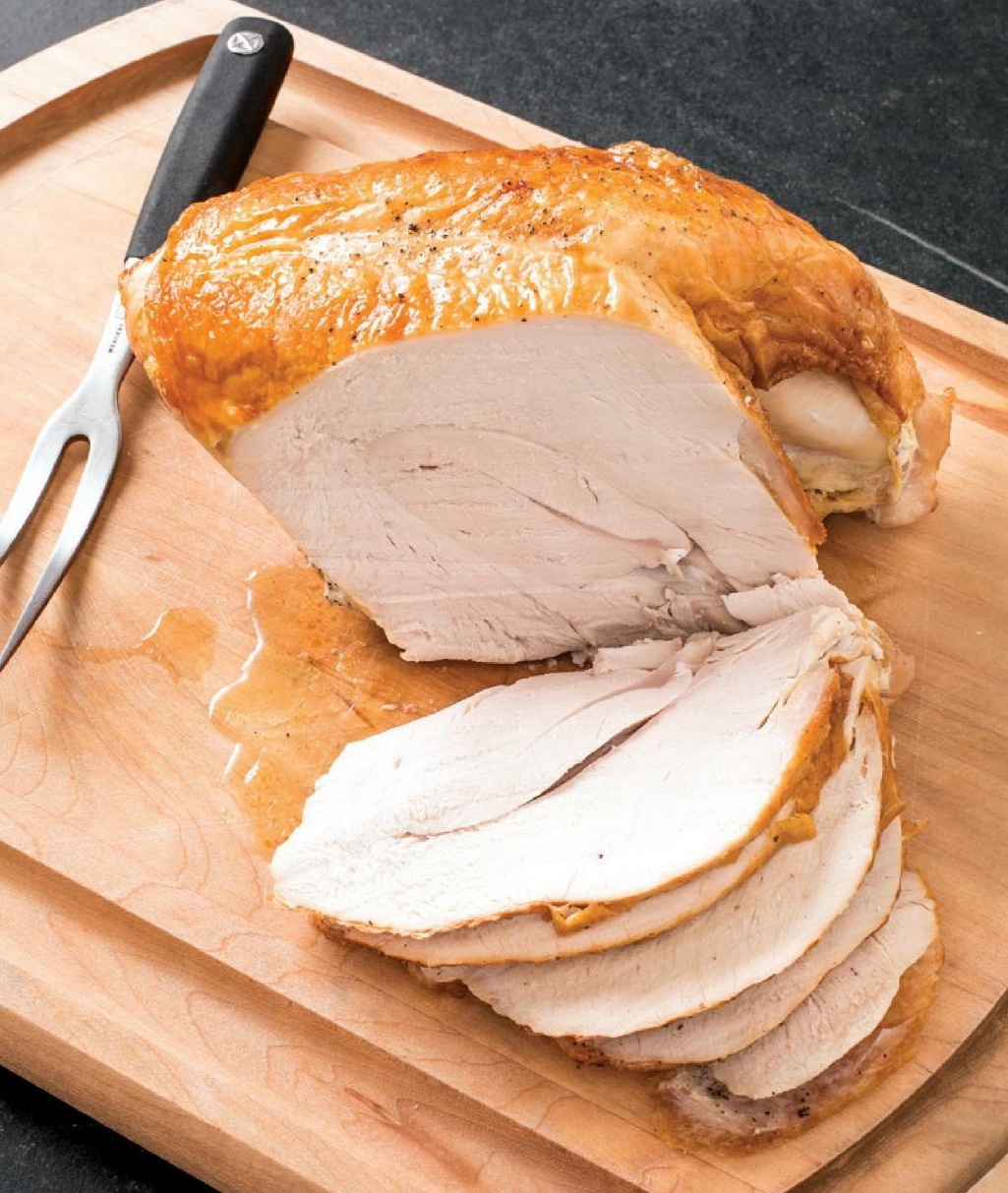
You don’t have to roast a whole turkey to get holiday-worthy moist meat and crisp skin. A whole breast is a great, manageable alternative. We started by brining the breast, which flavored the mild white meat and helped it hold moisture. Loosening the skin and rubbing the meat underneath with softened butter promoted browner, crispier skin. We found that a dual-temperature approach to cooking was best: Starting the turkey breast in a 425-degree oven jump-started browning, and reducing the heat to 325 degrees after 30 minutes allowed the meat to finish cooking gently. If you’re using a self-basting turkey breast or a kosher turkey, skip the brining in step 1. Pair this roast with cranberry sauce (see this page) for a classic complement.

Ingredients


  • ½ cup salt
  • 1 (6- to 7-pound) bone-in turkey breast, trimmed
  • 4 tablespoons unsalted butter, softened
  • ¼ teaspoon pepper


Cooking Procedure


  1. Dissolve salt in 1 gallon cold water in large container. Submerge turkey in brine, cover, and refrigerate for 3 to 6 hours.
  2. Adjust oven rack to middle position and heat oven to 425 degrees. Set V-rack inside roasting pan and spray with vegetable oil spray. Combine butter and pepper in bowl.
  3. Remove turkey from brine and pat turkey dry with paper towels. Using your fingers, gently loosen skin covering each side of breast. Place butter mixture under skin, directly on meat in center of each side of  breast. Gently press on skin to distribute butter mixture over meat.
  4. Place turkey, skin side up, on prepared V-rack and add 1 cup water to pan. Roast turkey for 30 minutes.
  5. Reduce oven temperature to 325 degrees and continue to roast until thermometer inseted into thickest part of turkey registers 160 degrees, about 1 hour longer.
  6. Transfer turkey to carving board and let rest for 20 minutes. Carve turkey and serve.


Cook with a twist - Roast Turkey Breast with Orange and Rosemary

Add 3 minced garlic cloves, 1 tablespoon minced fresh rosemary, 1 teaspoon grated orange zest, and ¼ teaspoon red pepper flakes to butter mixture.

Cook with a twist - Roast Turkey Breast with Southwestern Flavors

Add 3 minced garlic cloves, 1 tablespoon minced fresh oregano, 2 teaspoons ground cumin, 2 teaspoons chili powder, ¾ teaspoon unsweetened cocoa powder, and ½ teaspoon cayenne pepper to butter mixture.

Chef's technique BRINING MAKES IT BETTER

We often rely on one of two methods to boost flavor and juiciness when cooking meat and poultry: brining or salting. Brining works faster and is best for lean cuts like turkey breast because it adds, rather than merely retains, moisture. As it soaks, the meat absorbs the brine and retains it during cooking. The result? The juiciest, besttasting meat you have ever eaten. All you need is refrigerator space, a little time, and a big container.

Weeknight Whole Roast Chicken with Tarragon- Lemon Pan Sauce

Weeknight Whole Roast Chicken with Tarragon- Lemon Pan Sauce


Few dishes are more impressive than a roast chicken—or more rewarding. While there is no single perfect way to make one, there are factors to consider, chiefly that different parts cook at different rates, and that chicken is prone to drying out. Ideally, you’d salt or brine the bird, but that takes time. This recipe uses a creative, weeknight-friendly approach: We start with a preheated skillet to give the slower-cooking thighs a jump-start and then literally turn the oven off halfway through cooking. This helps the meat finish cooking gently and slows the evaporation of juices as the oven cools. We prefer to use a 3½- to 4-pound chicken; if roasting a larger bird, increase the time when the oven is on in step 2 to 35 to 40 minutes. Prep all sauce ingredients while the chicken is in the oven and make the sauce itself while the chicken rests.

Serves: 4
Total Time: 1 hour 30 minutes

Ingredients

CHICKEN
1 tablespoon kosher salt
½ teaspoon pepper
1 (3½- to 4-pound) whole chicken, giblets discarded
1 tablespoon olive oil
TARRAGON-LEMON PAN SAUCE
1 shallot, minced
1 cup chicken broth
2 teaspoons Dijon mustard
2 tablespoons unsalted butter
2 teaspoons minced fresh tarragon
2 teaspoons lemon juice
Pepper

Cooking Procedure


  1. FOR THE CHICKEN Adjust oven rack to middle position, place 12-inch oven-safe skillet on rack, and heat oven to 450 degrees. Combine salt and pepper in bowl. Pat chicken dry with paper towels. Rub oil all over chicken. Sprinkle salt mixture evenly over surface of chicken, then rub mixture in with your hands to coat evenly. Tie legs together with kitchen twine and tuck wingtips behind back.
  2. Transfer chicken, breast side up, to skillet in oven. Roast until thermometer inserted into breast registers 120 degrees and thighs register 135 degrees (taking care not to hit bone), 25 to 35 minutes. Turn off oven and leave chicken in oven, opening door as little as possible, until breast registers 160 degrees and thighs register 175 degrees, 25 to 35 minutes longer. Transfer chicken to carving board and let rest, uncovered, for 20 minutes.
  3. FOR THE PAN SAUCE Meanwhile, using large spoon, carefully remove all but 1 tablespoon fat from skillet (handle will be hot), leaving any browned bits and just in skillet. Place skillet over medium-high heat, add shallot, and cook until softened, about 2 minutes. Stir in broth and mustard, scraping up any browned bits. Simmer until reduced to ¾ cup, about 3 minutes. Off heat, whisk in butter, tarragon, and lemon juice. Season with pepper to taste. Carve chicken and serve with sauce.

Put some Twist | Thyme–Sherry Vinegar Pan Sauce

Add 2 minced garlic cloves and 2 teaspoons chopped fresh thyme to skillet with shallot. Omit tarragon and substitute sherry vinegar for lemon juice.

Chef's Secret Tips | WHOLE CHICKEN CHALLENGES

The natural shape of a chicken creates certain challenges when you try to roast it whole. Within a whole chicken there are actually two different types of meat: dark meat (thighs and drumsticks) and white meat (breast). Dark meat cooks more slowly than white meat. This is mainly due to the fact that dark meat is denser because it has more fat and proteins. To account for this difference, we cook the bird thigh side down in a preheated skillet to give the dark meat a head start. To prevent it from drying out while ensuring it is safe to eat, white meat should be cooked to an internal temperature of 160 degrees and dark meat should be cooked to 175 degrees. Having a good instant-read thermometer is essential for perfectly cooked chicken.
Another challenge with whole chickens is getting crisp skin. Make sure to blot the chicken dry with paper towels before cooking to eliminate excess moisture that can cause the skin to steam and become flabby.

Oven-Roasted Chicken Parts with Lemon and Herbs

Oven-Roasted Chicken Parts with Lemon and Herbs


A chicken needn’t be roasted whole. Often, we turn to roasting individual parts—a largely walkaway approach that allows you to use whatever combination of parts you want. To encourage crispy skin and avoid the flabbiness that plagues some recipes, we brushed the parts with melted butter and roasted them in a 450-degree oven, elevating them on a wire rack to let the fat render away. Using bone-in, skin-on parts insulated the meat, ensuring it would stay juicy in the hot oven. Because dark meat cooks slower than white meat (and should be cooked to 175 degrees rather than 160 degrees for white), be prepared to remove different cuts at different times, or simply roast all breasts, or all thighs, and so on. Rubbing herb butter under the skin adds incredible flavor, but you can skip it if you prefer. Serve with lemon wedges.

Ingredients

4 pounds bone-in chicken pieces (split breasts, whole legs, thighs, and/or drumsticks), trimmed
of excess fat and skin
3 tablespoons unsalted butter, softened, plus 2 tablespoons melted
1 tablespoon minced fresh thyme, rosemary, tarragon, or sage
1 teaspoon grated lemon zest
Salt and pepper

Cooking Procedure


  1. Adjust oven rack to upper-middle position and heat oven to 450 degrees. Line rimmed baking sheet with aluminum foil and set wire rack in baking sheet.
  2. Mix softened butter with herbs, lemon zest, ¼ teaspoon salt, and ¼ teaspoon pepper in small bowl.
  3. Pat chicken dry with paper towels. Use your fingers to carefully separate skin from meat on chicken pieces. Rub butter mixture underneath skin of chicken. Arrange chicken, skin side up, on prepared wire rack. Brush chicken with melted butter and season with salt and pepper.
  4. Roast until thermometer inserted into breasts registers 160 degrees, about 30 minutes, and legs, thighs, and/or drumsticks register 175 degrees, about 30 minutes for drumsticks and 45 minutes for legs and thighs. Transfer chicken to cutting board and let rest for 5 minutes.

Variation-Roasted Chicken Parts with Honey and Mustard

Instead of lemon-herb-butter mixture, mix ¼ cup Dijon mustard, 2 tablespoons honey, and 1 teaspoon packed brown sugar together in bowl. Brush over chicken several times during last 5 minutes of cooking.

Variation-Roasted Chicken Parts with Five-Spice Powder and Ginger

Instead of lemon-herb-butter mixture, mix 3 tablespoons softened unsalted butter with 1 tablespoon grated fresh ginger, 1 teaspoon five-spice powder, ¼ teaspoon salt, and ¼ teaspoon pepper in bowl. Rub butter mixture underneath skin of chicken.

Chef's Tips - (POULTRY) SKIN IN THE GAME

When cooking poultry, we recommend that you either make sure the skin ends up nice and crispy or remove it before serving. Flabby chicken or turkey skin is unappealing and unattractive; it isn’t something anyone wants to eat or see on the plate. But the crisp, well-browned skin on a great roast chicken can be the best part of the dish. That’s because when you sauté or roast the skin and it reaches temperatures over 300 degrees, a set of reactions take place in its fats and proteins to produce hundreds of deeply flavorful compounds.

Chef's Tips - The Keys to Crisp Skin

In order to get the skin as crisp as possible, you need to render all the fat between the skin and the meat. Tricks like elevating the poultry on a rack while cooking in the oven help with this, as does cutting slashes in the skin. You can also brown the skin in a hot skillet and then finish cooking the chicken in the skillet over a lower temperature, or in the even heat of the oven (this has the added benefit of creating flavorful browned bits—fond—in the skillet, great for making a pan sauce). When the skin is fully cooked it will not only turn a lovely golden brown color, it will also get super crispy, almost like a potato chip. When you’re trying to gauge doneness, watch for both the color and the texture of the skin to change.

Chef's Tips - Shedding the Skin

Chicken skin is like a raincoat: It’s an effective barrier, keeping what’s outside out and what’s inside in. This is especially important in oven-roasted recipes, where the skin helps protect delicate white meat in the hot oven, but if you don’t want to serve the skin you can remove and discard it before serving. Chicken skin is slippery; to simplify the task, use a paper towel to provide extra grip when pulling off the skin. For stews and braises, if you don’t crisp the skin and render the fat, you should typically discard the skin before cooking. If you don’t, the fat will render into the stew or sauce, which could make it overly greasy.

Oven-Roasted Pork Tenderloin with Shallot-Balsamic Pan Sauce

Oven-Roasted Pork Tenderloin with Shallot-Balsamic Pan Sauce


Pork tenderloin is a super friendly cut to experiment with in the kitchen; it’s easy to prepare and cooks quickly. One of our favorite ways to cook it is a two-step pan-searing, oven-roasting technique, which gives the meat a golden crust and an evenly cooked, juicy interior. To punch up the mild pork, we used the fond left behind in the pan to build a deeply flavored pan sauce when we transferred the meat to the oven. We prefer natural pork tenderloin to enhanced pork tenderloin (which has been injected with a salt solution). This recipe calls for cooking two tenderloins at the same time in the same skillet, so be sure to buy tenderloins that are roughly the same size. This recipe will work in a nonstick or a traditional skillet. You will make the pan sauce while the tenderloins roast, so be sure to prepare all of the sauce ingredients before searing the pork.

Serves 4
Total Time: 45 minutes

Ingredients

PORK

  • 2 (12- to 16-ounce) pork tenderloins, trimmed
  • 1¼ teaspoons kosher salt
  • ¾ teaspoon pepper
  • 2 teaspoons vegetable oil

SHALLOT-BALSAMIC PAN SAUCE

  • 4 tablespoons unsalted butter, cut into 4 pieces and chilled
  • 2 shallots, sliced thin
  • 2 tablespoons water
  • 1 teaspoon packed light brown sugar
  • ¾ cup balsamic vinegar
  • 2 teaspoons chopped fresh rosemary
  • 1 tablespoon Dijon mustard
  • Salt and pepper

Cooking Procedure


  1. FOR THE PORK Adjust oven rack to middle position and heat oven to 400 degrees. Sprinkle tenderloins with salt and pepper and rub into meat. Heat oil in 12-inch skillet over medium-high heat until just smoking. Place both tenderloins in skillet; cook until well browned, about 3 minutes. Using tongs, rotate tenderloins one-quarter turn; cook until well browned, 1 to 2 minutes. Repeat until all sides are browned. Transfer tenderloins to rimmed baking sheet and place in oven; roast until thermometer inserted into center of tenderloins registers 145 degrees, 10 to 16 minutes.
  2. FOR THE PAN SAUCE Meanwhile, immediately after placing pork in oven, melt 1 tablespoon butter in still-hot skillet. Add shallots, water, and sugar and cook over medium-low heat, stirring frequently, until shallots are browned and caramelized, 7 to 10 minutes; remove skillet from heat and set aside.
  3. Transfer tenderloins to cutting board and tent with aluminum foil; let rest for 10 minutes.
  4. While pork rests, set skillet over medium-low heat and add vinegar; simmer, scraping up any browned bits, until mixture is slightly thickened, 5 to 7 minutes. Add rosemary and any juices from resting pork; continue to simmer until syrupy and reduced to about ⅓ cup, about 2 minutes longer. Off heat, whisk in mustard and remaining 3 tablespoons butter, 1 piece at a time. Season with salt and pepper to taste.
  5. Slice tenderloins ½ inch thick and serve with sauce.

IMPROVISING A PAN SAUCE

So you just pan-seared a steak, chop, or chicken breast, and have a pan full of browned, stuck-on bits. But wait! Don’t clean that pan! Pan sauces take advantage of that fond to create a rich, deeply flavored accompaniment for the meat. Although the ingredients can change depending on the sauce, the steps are the same.

Pour Off Excess Fat

If there’s more than a tablespoon of fat in the pan, pour off the excess or the sauce will be greasy. If there’s very little fat in the pan, add a little vegetable oil or butter.

Add Aromatics

Aromatics like shallot, garlic, or onion will enhance the flavor of a quick pan sauce and give it depth.
Deglaze the Pan Add liquid to the pan and use a wooden spoon to scrape up the browned bits. The fond dissolves as the liquid simmers, adding meaty flavor.

Simmer and Reduce

You want to reduce the liquid to both concentrate flavors and change its consistency. Don’t shortcut this process, or your sauce will be too watery.

Add Meat Juices

As the meat rests, it will exude juices. Add these juices to the skillet and simmer to reduce. Add robust seasonings such as rosemary or capers so they can cook a bit.

Whisk in Butter

Off heat, whisk in chilled unsalted butter, 1 tablespoon at a time, to make the sauce thick and glossy. To finish, add seasonings such as leafy herbs, salt, and pepper. If the pan sauce isn’t vinegar- or citrus-based,
add a splash of vinegar or lemon juice to brighten it up.

Authentic Recipe Slow-Roasted Beef with Horseradish Cream Sauce

Authentic Recipe Slow-Roasted Beef with Horseradish Cream Sauce


Without proper preparation, inexpensive beef roasts can turn out tough and flavorless. To transform an affordable boneless eye-round roast into a centerpiece-worthy dish, we started by salting the meat and then
searing it before roasting. We also roasted it at a very low 225 degrees and then turned off the oven toward the end of cooking. This allowed the meat’s enzymes to break down the roast’s tough connective tissue. Open the oven as little as possible, and remove the roast from the oven (and close the oven door) while taking the meat’s temperature. If the roast has not reached the desired temperature in the time specified in step 5, reheat the oven to 225 degrees for 5 minutes, then shut it off and continue to cook the roast to the desired temperature. We don’t recommend cooking this roast past medium. Buy refrigerated prepared horseradish, not the shelf-stable kind, which contains preservatives and additives.

Serves 6 to 8
Total Time 2 hours 30 minutes (plus 18 hours for salting)

Ingredients

BEEF

  • 1 (3½- to 4½-pound) boneless eye-round roast, trimmed
  • 4 teaspoons kosher salt
  • 2 teaspoons plus 1 tablespoon vegetable oil
  • 2 teaspoons pepper

HORSERADISH CREAM SAUCE

  • ½ cup heavy cream
  • ½ cup prepared horseradish, drained
  • 1 teaspoon salt
  • ⅛ teaspoon pepper

Cooking Procedure


  1. FOR THE BEEF Rub roast thoroughly with salt, wrap in plastic wrap, and refrigerate for 18 to 24 hours.
  2. Adjust oven rack to middle position and heat oven to 225 degrees. Patroast dry with paper towels, rub with 2 teaspoons oil, and sprinkle with pepper.
  3. Heat remaining 1 tablespoon oil in 12-inch skillet over medium-high heat until just smoking. Brown roast well on all sides, 12 to 16 minutes; reduce heat if pan begins to scorch. Transfer roast to wire rack set in rimmed baking sheet and roast until thermometer inserted into center of meat registers 115 degrees (for medium-rare), 1¼ to 1¾ hours, or 125 degrees (for medium), 1¾ to 2¼ hours.
  4. FOR THE SAUCE Meanwhile, whisk cream in bowl until thickened but not yet stiff, 1 to 2 minutes. Gently fold in horseradish, salt, and pepper. Transfer to serving bowl and refrigerate for at least 30 minutes or up to 1 hour before serving.
  5. Turn oven off and leave roast in oven, without opening door, until meat registers 130 degrees (for medium-rare) or 140 degrees (for medium), 30 to 50 minutes.
  6. Transfer roast to carving board, tent with aluminum foil, and let rest for 15 minutes. Slice meat crosswise as thinly as possible and serve with sauce.


HOT FOOD KEEPS COOKING

To get a cut of meat to the table cooked just right, you have to know a little bit about physics. The temperature of meat keeps rising even after you stop cooking it. This is an effect called carryover cooking,
and it happens for two reasons: First, the exterior of a large roast gets hot much more quickly than the interior. Second, because heat always moves from a hotter to a cooler area, as long as there is a difference
in temperature between two areas of the meat (the very-hot outside and the less-hot inside), heat will keep moving from one to the other, even after you remove the meat from the heat source. Eventually the inside and outside will reach equilibrium, but before they get to that point, the carryover cooking can cause a significant increase in temperature at the center of a large roast, bringing it from a perfect pink to a disappointing gray. This means that if you wait until your meat is at your desired doneness before you take it out of the oven, it’ll probably be overdone by the time you sit down to eat.

Timing Is Everything

So when, exactly, should you remove meat from the heat source to ensure it finishes at the perfect temperature? Both the size of the food and the heat level during cooking will affect the answer. A large roast
will absorb more heat than a thin steak, which means that there will be more heat in the meat and therefore a greater amount of carryover cooking. Similarly, carryover cooking is greater in a roast cooked in a hotter oven. In general, however, meat should be removed from the oven when it’s 5 to 10 degrees below the desired serving temperature.

Exceptions to the Rule: Poultry and Fish

Carryover cooking also applies to poultry and fish, although they don’t retain heat as well as beef, lamb, and pork, which have denser muscle structure. For this reason and for optimal food safety, poultry and fish should be cooked to the desired serving temperatures. Cooking loosely structured proteins like fish at lower temperatures is a good way to avoid overcooking; the hotter the oven, the more dramatic the effect of carryover cooking.

Butter-Basted Rib-Eye Steak - Make your own at home!

Butter-Basted Rib-Eye Steak - Make your own at home!


Steaks can be cooked every which way, but one of the most satisfying methods we’ve found is pan-searing and butter-basting a thick-cut rib eye. This cut is tender and juicy—it’s essentially a boneless piece of prime rib—so it works best with a simple preparation that lets its beefy flavor shine through. Butter basting involves continuously spooning hot fat over an item as it cooks. Adding aromatics to the butter infused the whole dish with subtle savory flavor. In addition to butter-basting, we also flipped the steak throughout the entire cooking process. This technique gave us a great crust on both sides of the steak and evenly cooked the meat all the way through. Salting the steak at least 45 minutes before cooking increases its tenderness and juiciness (see “Salt + Time = Better Meat”) though you can skip the wait if you don’t have time. While not very complicated, this recipe calls for your full attention in order to be successful, so don’t be distracted while cooking this one.

Serves: 2 to 3
Total Time: 30 minutes (plus 45 minutes for salting)

Ingredients


  • 1 (1-pound) rib-eye steak, about 1½ inches thick, trimmed
  • 2 teaspoons kosher salt
  • 3 tablespoons vegetable oil
  • Pepper
  • 4 tablespoons unsalted butter
  • 1 large shallot, peeled and quartered lengthwise (root end attached)
  • 2 garlic cloves, peeled
  • 5 sprigs fresh thyme


Cooking Procedure


  1. Sprinkle steak evenly on both sides with salt and place on wire rack set in rimmed baking sheet. Let sit for at least 45 minutes or up to 3 hours (if waiting more than 1 hour, transfer steak to refrigerator, uncovered, until you are ready to cook).
  2. Heat oil in 10-inch skillet over high heat until just smoking. Pat steak dry with paper towels and season liberally on both sides with pepper. Place steak in skillet and cook for 30 seconds. Flip steak using tongs and continue to cook for 30 seconds longer. Continue flipping steak every 30 seconds for 3 more minutes.
  3. Slide steak to back of skillet, opposite handle, and add butter to front of skillet. Once butter has melted and begun to foam, add shallot, garlic, and thyme sprigs. Holding skillet handle, tilt skillet so butter pools near base of handle. Use metal spoon to continuously spoon butter and aromatics over steak, concentrating on areas where crust is less browned. Baste steak, flipping it every 30 seconds, until thermometer inserted into center registers 120 to 125 degrees (for medium-rare), 1 to 2 minutes.
  4. Remove skillet from heat and transfer steak to cutting board; let steak rest for 10 minutes. Discard aromatics from pan and transfer butter mixture to small bowl. Slice steak crosswise ½ inch thick. Serve immediately with butter mixture.

SEASONING MEAT


No matter how well cooked the meat is, it won’t taste very good if it’s not properly seasoned. Season Early For the most well-rounded flavor, we encourage seasoning meat before cooking. This gives the salt time to migrate into the food and allows heat to tame the punch of pepper. Seasoning properly at the start is especially important with steaks, chops, and roasts since you won’t be able to season them to taste after cooking without cutting off a piece!

Salt + Time = Better Meat

You can certainly season with salt right before cooking for flavor, but you can also use salt (and time) in advance of cooking to improve the texture of many cuts of meat. When salt is applied to raw meat, juices
inside the meat are drawn to the surface. The salt then dissolves in the exuded liquid, forming a brine that is eventually reabsorbed by the meat, creating juicier and more flavorful results. But you do have to wait until the brine is reabsorbed; if you try to pan-sear the meat too soon, the liquid will inhibit browning in the skillet. We prefer to use kosher salt for salting meat because it’s easier to distribute the salt evenly. See this page for information about converting measurements if you want to use sea salt or table salt instead.

Seasoning with Flair (and a Purpose)

In recipes that call for seasoning meat with a specified amount of salt, it can be tempting to sprinkle very close to the meat so that none of the salt is lost to the cutting board. Unfortunately, this leads to an uneven distribution of salt. There’s a reason that chefs tend to season food by sprinkling the seasoning from a good foot above the counter, and it’s not just kitchen theatrics: The higher the starting point, the more evenly the seasoning will be distributed. The more evenly distributed the seasoning, the better the food tastes. So next time you have to season a steak, place the meat on a rimmed baking sheet and sprinkle with the specified amount of salt from up high. Then simply pick up each piece of meat and roll it in any salt that has landed on the baking sheet.

Pasta with Garlic and Oil (Aglio e Olio) - How to cook your own Pasta at home

Pasta with Garlic and Oil (Aglio e Olio) - How to cook your own Pasta at home


Call it the simplest spaghetti dish, a pantry dinner mainstay, or a favorite midnight meal among Italians, but don’t call it plain. Our take on aglio e olio is packed with flavor, thanks to a whopping 12 cloves of garlic. Cooking most of the garlic slowly over low heat softened its edge, turning it golden, nutty-tasting, and subtly sweet. Stirring in raw garlic off the heat delivered some bite to the sauce, while lemon juice balanced the oil’s richness. With such a minimal sauce, getting perfectly al dente pasta is critical, as its texture can make or break the dish. So taste often to avoid overcooking. And reserve some of the cooking water before draining the pasta; the water is used to loosen the texture of the sauce. For a twist on this dish, try sprinkling toasted bread crumbs over the individual serving bowls.

Ingredients

6 tablespoons extra-virgin olive oil
12 garlic cloves, minced (4 tablespoons)
Salt and pepper
3 tablespoons minced fresh parsley
2 teaspoons lemon juice
¾ teaspoon red pepper flakes
1 pound spaghetti
Grated Parmesan cheese

Procedure


  1. Cook 3 tablespoons oil, 3 tablespoons garlic, and ½ teaspoon salt in 10-inch nonstick skillet over low heat, stirring often, until garlic foams and is sticky and straw-colored, about 10 minutes. Off heat, stir in parsley, lemon juice, pepper flakes, remaining 3 tablespoons oil, and remaining 1 tablespoon garlic.
  2. Meanwhile, bring 4 quarts water to boil in large pot. Add pasta and 1 tablespoon salt and cook, stirring often, until almost al dente. Reserve ½ cup cooking water, then drain pasta in colander and return it to pot.
  3. Stir 2 tablespoons reserved cooking water into garlic sauce to loosen, then add sauce to pasta and toss to combine. Season with salt and pepper to taste and add remaining reserved cooking water as needed to adjust consistency. Serve with Parmesan.

Variation

Pasta with Garlic, Oil, and Artichokes

Transfer cooked garlic mixture to bowl before combining with other ingredients at end of step 1. Heat 2 teaspoons extra-virgin olive oil in now-empty skillet over medium-high heat until shimmering. Add 9 ounces frozen artichoke hearts, thawed and patted dry, and ⅛ teaspoon salt and cook until artichokes are lightly browned and tender, 4 to 6 minutes. Add cooked artichokes to pasta with garlic sauce.

PASTA PERFECT

Pasta is one of those things that is easy to cook, but hard to cook just right. We prefer pasta cooked al dente, with a little bite left in the center (al dente is Italian for “to the tooth”). Follow these simple steps for perfect pasta every time.

Use Plenty of Water

Pasta leaches starch as it cooks; without plenty of water to dilute the starch, it will coat the noodles and they will stick together. We recommend 4 quarts of water for 1 pound of pasta. Use a pot with at least a 6-quart capacity, and fill it with cold tap water; warm water can pick up off-flavors from your water heater. Make sure to bring the water to a rolling boil over high heat; pasta cooks best (and fastest) in boiling, not simmering, water.

Salt the Water, Don’t Oil It

Once the water is boiling, add 1 tablespoon of salt to flavor the pasta. Don’t add oil: It does nothing for the pasta and also prevents the sauce from adhering. When You Add the Pasta, Give It a Stir Stirring the pasta when you first add it to the water, and occasionally as it cooks, will prevent it from sticking.

Check Often for Doneness

Several minutes before the pasta should be done, begin tasting it— that’s really the only way to know when it’s ready. When the pasta is almost al dente, remove the pot from heat. Because the pasta continues to cook after it is drained, you need to compensate by draining when it is just a little underdone.

Reserve Some Cooking Water Before Draining

Get in the habit of saving about ½ cup of the cooking water before you drain the cooked pasta. Then, when you add your sauce to the pasta, add some (or all) of the starchy reserved water. This helps spread the sauce and gets it to the proper consistency.

Sauce in the Pot

Returning the drained pasta to the pot and then saucing it ensures evenly coated, hot pasta.

Healthy Quinoa Pilaf with Herbs and Lemon - How to make your own quinoa at home

Healthy Quinoa Pilaf with Herbs and Lemon - How to make your own quinoa at home


While in theory this “supergrain” should be appealingly nutty and crunchy, cooked quinoa often ends up a mushy mess with washed-out flavor and an underlying bitterness. For a simple quinoa pilaf with light, distinct grains and great flavor, we used less water than most quinoa recipes to avoid any mushiness. We also toasted the quinoa to develop its natural nuttiness before simmering. We flavored our pilaf with onion sautéed in fat and finished it with herbs and a squeeze of lemon juice. Quinoa is also easily adapted to a variety of other flavor profiles as in the variations. We like the convenience of prewashed quinoa; rinsing removes the quinoa’s bitter protective coating (called saponin). If you buy unwashed quinoa (or if you are unsure whether it’s washed), rinse it and then spread it out over a clean dish towel to dry for 15 minutes before cooking.

Ingredients


  • 1½ cups prewashed white quinoa
  • 2 tablespoons unsalted butter or extra-virgin olive oil
  • 1 small onion, chopped fine
  • ¾ teaspoon salt
  • 1¾ cups water
  • 3 tablespoons chopped fresh cilantro, parsley, chives, mint, or tarragon
  • 1 tablespoon lemon juice

  1. Toast quinoa in medium saucepan over medium-high heat, stirring frequently, until quinoa is very fragrant and makes continuous popping sound, 5 to 7 minutes; transfer to bowl.
  2. Melt butter in now-empty saucepan over medium-low heat. Add onion and salt and cook until onion is softened and light golden, 5 to 7 minutes. Stir in water and toasted quinoa, increase heat to medium-high, and bring to simmer. Cover, reduce heat to low, and simmer until grains are just tender and liquid is absorbed, 18 to 20 minutes, stirring once halfway through cooking.
  3. Remove saucepan from heat and let sit, covered, for 10 minutes. Fluff quinoa with fork, stir in herbs and lemon juice, and serve.

Variations

Quinoa Pilaf with Goat Cheese and Chives

Substitute 4 minced garlic cloves for onion; cook until fragrant, about 30 seconds, before adding toasted quinoa. Use chives for chopped herbs. Sprinkle with ½ cup crumbled goat cheese before serving.

Quinoa Pilaf with Olives, Raisins, and Cilantro

Add ¼ teaspoon ground cumin, ¼ teaspoon dried oregano, and ⅛ teaspoon ground cinnamon to saucepan with onion. Stir in ¼ cup golden raisins halfway through cooking quinoa. Substitute ⅓ cup coarsely chopped pimento-stuffed green olives and 3 tablespoons chopped fresh cilantro for chopped fresh herbs, and 4 teaspoons red wine vinegar for lemon juice.

Quinoa Pilaf with Apricots, Aged Gouda, and Pistachios

Add ½ teaspoon grated lemon zest, ½ teaspoon ground coriander, ¼ teaspoon ground cumin, and ⅛ teaspoon pepper to saucepan with onion. Stir in ½ cup coarsely chopped dried apricots before letting quinoa sit for 10 minutes in step 3. Substitute ½ cup shredded aged gouda; ½ cup shelled pistachios, toasted and chopped coarse; and 2 tablespoons chopped fresh mint for herbs.

WHAT IS A PILAF?

You may associate pilaf with rice, but the pilaf method can be used to cook any grain. It is a simple but elegant approach where the grain is toasted before being simmered slowly in liquid until it’s tender and superflavorful. We use the pilaf method for many grains, including rice, bulgur, quinoa, barley, and millet, as well as pasta and couscous. It produces grains with a light, fluffy texture and an extra layer of nutty, toasted flavor that you don’t get from just boiling the grains. Many pilaf recipes also add sautéed aromatics like onion, garlic, or shallot to the grain for an extra-flavorful dish. Other ways to build complex flavor in this simple preparation include swapping in chicken broth for water and stirring in chopped fresh herbs, dried fruit, cheese, or other additions before serving, as in the variations here. Make sure you use a sturdy, heavy-bottomed saucepan with a tight-fitting lid for any pilaf recipe so the rice or grain will cook evenly and not scorch or stick to the pan.

Cooking Delicious Foolproof Baked Brown Rice - The easy way!

Cooking Delicious Foolproof Baked Brown Rice - The easy way!


Brown rice is ultimately satisfying, with nutty flavor and serious textural personality. While it’s often steamed, baking it in an aluminum foil– covered dish ensures more even cooking and makes it a simple, hands off endeavor. We found that we needed less liquid than the 2:1 water-to-rice ratio usually advised by rice producers and recipes. Adding boiling water jump-started the cooking process. A small amount of oil complemented the flavor while keeping the rice fluffy. For an accurate measurement of boiling water, bring a full kettle to a boil, then measure out the desired amount. If your baking dish has a lid, it may be used instead of the aluminum foil. To double the recipe, use a 13 by 9-inch baking dish; the baking time does not need to be increased. You can use long-, medium-, or short-grain brown rice. This method also works for long-grain white rice with a few modifications; see the variation.

Serves: 4 to 6
Total Time: 1 hour 30 minutes

Ingredients

2⅓ cups boiling water
1½ cups long-grain, medium-grain, or short-grain brown rice, rinsed
2 teaspoons extra-virgin olive oil
Salt and pepper

Procedure


  1. Adjust oven rack to middle position and heat oven to 375 degrees. Combine boiling water, rice, oil, and ½ teaspoon salt in 8-inch square baking dish.
  2. Cover dish tightly with double layer of aluminum foil. Transfer dish to oven and bake until liquid is absorbed and rice is tender, about 1 hour.
  3. Remove dish from oven, uncover, and fluff rice with fork, scraping up any rice that has stuck to bottom. Cover dish with clean dish towel and let rice sit for 5 minutes. Uncover and let rice sit 5 minutes longer. Season with salt and pepper to taste, and serve.

Foolproof Baked White Rice

Basmati, jasmine, or Texmati rice can also be used in this recipe. Adjust oven rack to middle position and heat oven to 450 degrees. Combine 2¾ cups boiling water, 1⅓ cups rinsed long-grain white rice, 1 tablespoon extra-virgin olive oil, and ½ teaspoon salt in 8-inch square baking dish. Cover dish tightly with double layer of aluminum foil. Transfer dish to oven and bake until liquid is absorbed and rice is tender, about 20 minutes. Remove dish from oven, uncover, and fluff rice with fork, scraping up any rice that has stuck to bottom. Cover dish with clean dish towel and let rice sit for 10 minutes. Season with salt and pepper to
taste and serve.

JAZZING UP PLAIN RICE

To add some oomph to plain rice, try one of these ideas to turn it into a flavorful side dish in no time.

  • Add butter, minced fresh herbs, and/or citrus zest.
  • Stir in a compound butter (see this page).
  • Mix in heartier ingredients for a more substantial side dish to match the flavors of your meal. Some combinations we like are chopped dried fruit, toasted nuts, and goat cheese, or sliced olives, feta, and pine nuts. Or use black beans, cilantro, and lime juice for a Latininspired dish.
  • Let the rice cool, then toss with a vinaigrette (see this page) to make rice salad.

Luscious Pan-Seared Thick-Cut Pork Chops - The salting procedure secret!

Luscious Pan-Seared Thick-Cut Pork Chops - The salting procedure secret!


Thick-cut chops are decadent, restaurant-style fare, but come with the challenge of cooking the inside without overcooking the exterior. For perfect chops, we flip-flopped conventional logic and started them in a low oven, letting the meat gently tenderize before finishing by searing them in a hot pan to create a beautifully caramelized exterior. Buy chops of similar thickness so that they cook at the same rate. We prefer the flavor of natural chops over that of enhanced chops (which have been injected with a salt solution and sodium phosphate to increase moistness and flavor), but if processed pork is all you can find, skip the salting step in step 1. Serve the chops with Salsa Verde or your favorite applesauce.

Serves: 4
Total Time: 1 hour (plus 45 minutes for salting)

Ingredients


  • 4 (12-ounce) bone-in pork rib chops, 1½ inches thick, trimmed
  • Kosher salt and pepper
  • 1–2 tablespoons vegetable oil

Procedure


  1. Adjust oven rack to middle position and heat oven to 275 degrees. Pat chops dry with paper towels. Using sharp knife, cut 2 slits, about 2 inches apart, through outer layer of fat and silverskin around edge of each chop. (This membrane contracts faster than rest of meat and can cause buckling if left intact.) Sprinkle entire surface of each chop with 1 teaspoon salt. Place chops on wire rack set in rimmed baking sheet and let stand at room temperature for 45 minutes.
  2. Season chops liberally with pepper; transfer baking sheet to oven. Cook until thermometer inserted into centers of chops and away from bones registers 120 to 125 degrees, 30 to 45 minutes.
  3. Heat 1 tablespoon oil in 12-inch heavy-bottomed skillet over high heat until just smoking. Place 2 chops in skillet and sear until well browned and crusty, 1½ to 3 minutes, lifting once halfway through to redistribute fat underneath each chop. (Reduce heat if browned bits in pan bottom start to burn.) Using tongs, turn chops and cook until well browned on second side, 2 to 3 minutes. Transfer chops to plate and repeat with remaining 2 chops, adding extra tablespoon oil if pan is dry.
  4. Reduce heat to medium. Use tongs to stand 2 pork chops on their sides. Holding chops together with tongs, sear sides of chops (with exception of bone side) until browned and chops register 140 to 145 degrees, about 1½ minutes. Repeat with remaining 2 chops. Let chops rest, tented with aluminum foil, for 10 minutes.

A REVERSE SEAR

It’s difficult to cook thicker steaks (1½ to 1¾ inches thick) such as filets mignons and pork chops entirely on the stovetop; you often end up with a burnt exterior and a raw center. Even if you can manage to avoid burning the exterior, the meat around the perimeter is usually overcooked by the time the center comes to temperature. The secret to getting a great crust on extra-thick chops and steaks without making them tough is to cook them in a very low oven, then quickly sear them. This is called reverse searing. The gentle oven heat minimizes moisture loss and promotes a natural enzymatic reaction that breaks down connective tissue in the meat and makes it especially tender. We also roast the meat on a wire rack, which allows the hot air to circulate and dry the surface of the mat. The drier surface helps the meat brown even better in the skillet. After their time in the oven, the chops brown in record time, and since the meat is in the pan for just a few minutes, there isn’t time for it to lose much moisture or become overcooked.

Easy-Peel Hard-Cooked Eggs - The easy trick in cooking

Easy-Peel Hard-Cooked Eggs - The easy trick in cooking

A hard-cooked egg that’s just cooked through, with no chalkiness (or greenish tinge) to the yolk, is plenty good on its own sprinkled with salt, and it can also be used in myriad other ways. Cooking methods abound,
but we found that steaming, followed by an ice bath to halt the cooking, not only guarantees perfect eggs but also results in shells that slip off easily. Why? Hot steam hitting cold eggs rapidly cooks the outermost egg white proteins, which shrink away from the membrane. Be sure to use large, cold eggs that have no cracks. You can cook fewer than six eggs without altering the timing, or more eggs as long as your pot and steamer basket can hold them in a single layer. If you don’t have a steamer basket, use a spoon or tongs to gently place the eggs in the water. It does not matter if the eggs are above the water or partially submerged. Unpeeled cooked eggs can be stored in their shells in the refrigerator for up to 3 days.

Ingredients

6 large eggs

Procedure


  1. Bring 1 inch water to rolling boil in medium saucepan over high heat. Place eggs in steamer basket. Transfer basket to saucepan. Cover, reduce heat to medium-low, and cook eggs for 13 minutes.
  2. When eggs are almost finished cooking, combine 2 cups ice cubes and 2 cups cold water in medium bowl. Using tongs or spoon, transfer eggs to ice bath; let sit for 15 minutes.
  3. Crack wide end of each egg against a hard, flat surface. Starting at wide end of each egg, peel away shell. When done, dunk peeled egg back into ice bath to remove any stray bits of shell (if necessary).


Soft-Cooked Eggs

With a set white and fluid yolk, these have the appeal of poached eggs but are less fussy and can be eaten out of the shell. Precise timing is critical, so use a digital timer. You can use this method for one to six large, extra-large, or jumbo eggs without altering the timing. We recommend serving these eggs in egg cups and with buttered toast sticks, or soldiers, for dipping, or simply use the dull side of a butter knife to crack the egg along the equator, break the egg in half, and scoop out the insides with a teaspoon and serve as you would a poached egg—over toast, salad, or cooked vegetables. After adding steamer basket with eggs to saucepan of boiling water, reduce heat to medium-high and cook for 6½ minutes. Remove cover, transfer saucepan to sink, and place under cold running water for 30 seconds. Remove eggs from saucepan and serve, seasoning with salt and pepper to taste.

THE EGG-DONENESS CONTINUUM

The fundamental challenge in egg cookery is that an egg is not really one ingredient but two: the white and the yolk. And each solidifies at different temperatures: Whites start to thicken at 145 degrees and are fully set at 180. Yolks begin to thicken at 150 degrees and are fully set at 158; this narrow range means that just a minute or two of timing can completely change the consistency of your eggs, from creamy to fully set to overdone, as the photos below show. Our steaming method ensures a consistent temperature, allowing us to nail down more precise timing than boiling would, since adding eggs to a pot of boiling water lowers the temperature of the water. Just make sure to set a timer!

Dinner Style Fried Eggs Variation - How to cook your own at home

Dinner Style Fried Eggs Variation - How to cook your own at home


This method produces diner-style fried eggs with crisp edges and a runny yolk. If, like us, you have struggled with whites that never fully set up or yolks that overcook, it’s a game changer. The first thing to do is to reach for a nonstick skillet; there’s no point in frying eggs in anything else. Next, don’t skip preheating: It ensures the pan’s surface will be evenly hot, which is extra important for quick-cooking foods like eggs. Once you raise the heat, don’t dawdle: Each step from here takes under a minute. When checking the eggs for doneness, lift the lid just a crack to prevent loss of steam should they need further cooking. To fry just two eggs, use an 8-inch nonstick skillet and halve the amounts of oil and butter. You can use this method with extra-large or jumbo eggs without altering the timing.

Ingredients

2 teaspoons vegetable oil
4 large eggs
Salt and pepper
2 teaspoons unsalted butter, cut into 4 pieces and chilled

Procedure


  1. Heat oil in 12-inch nonstick skillet over low heat for 5 minutes. Meanwhile, crack 2 eggs into small bowl and season with salt and pepper. Repeat with remaining 2 eggs and second small bowl.
  2. Increase heat to medium-high and heat until oil is shimmering. Add butter to skillet and quickly swirl to coat pan. Working quickly, pour 1 bowl of eggs in 1 side of pan and second bowl of eggs in other side. Cover and cook for 1 minute. Remove skillet from burner and let stand, covered, 15 to 45 seconds for runny yolks (white around edge of yolk will be barely opaque), 45 to 60 seconds for soft but set yolks, and about 2 minutes for medium-set yolks. Slide eggs onto plates and serve.


Variation

Egg in a Hole

Use 6 eggs. Adjust oven racks to lowest and top positions, place rimmed baking sheet on lower rack, and heat oven to 500 degrees. Spread 2½ tablespoons softened unsalted butter evenly over 1 side of 6 slices
hearty white sandwich bread. Using 2½-inch biscuit cutter, cut out and remove circle from center of each piece of buttered bread. Remove hot sheet from oven, add 2½ tablespoons softened unsalted butter, and let
melt, tilting sheet to let butter cover sheet evenly. Place bread circles down center of sheet and bread slices on either side of circles, buttered side up. Return sheet to lower rack and bake until bread is golden, 3 to 5
minutes, flipping bread and rotating sheet halfway through baking. Remove sheet from oven and set inside second (room temperature) rimmed baking sheet. Crack 1 egg into each bread hole. Season eggs with salt and pepper. Bake on upper rack until whites are barely set, 4 to 6 minutes, rotating sheet halfway through baking. Transfer sheets to wire rack and let eggs sit until whites are completely set, about 2 minutes. Serve. Makes 6 toasts.

PUT AN EGG ON IT

Adding a fried egg on top of pretty much any dish makes it richer, heartier, and more luxurious. In addition to bulking up the protein content of your meal, a fried egg also comes with its own built-in sauce from the silky, runny yolk. This makes it a great topping for simple pasta dishes (try it on top of our Pasta with Garlic and Oil) or for salad greens to turn them into a light meal (spinach is especially nice).
Other recipes in this book that feature fried eggs as their finishing touch are our Bacon and Cheddar Breakfast Sandwiches, Brown Rice Bowls with Roasted Carrots, Kale, and Fried Eggs, and Vegetable Bibimbap. We also recommend trying one on top of Hash Browns, mixed into Faster Steel-Cut Oatmeal for a savory take on breakfast porridge, or as the ultimate decadent topping for The Burger Lover’s Burger.

Crispy Tofu Fingers with Sweet Chili Sauce - Chefs secret in cooking

Crispy Tofu Fingers with Sweet Chili Sauce - Chefs secret in cooking


Pan frying is one of our favorite ways to prepare tofu. It becomes crispy on the outside and creamy within, perfect for dipping into a sauce, as we do here, or adding to salads (see the variation). To ensure the tofu got
nice and crisp, we first drained it thoroughly. A coating of cornstarch and cornmeal gave us a crunchy, golden-brown crust that paired perfectly with a quick spicy-sweet chili sauce. We prefer the softer, creamier
texture of soft tofu here for the perfect contrast between creamy interior and crispy exterior. Medium-firm, firm, or extra-firm tofu will also work, but will taste drier. You can find Asian chili-garlic sauce in Asian markets or the international aisle of most supermarkets. Be sure to handle the tofu gently and pat it dry thoroughly before seasoning and coating.

Serves: 4
Total Time: 45 minutes

Ingredients

28 ounces soft tofu
4 teaspoons plus ¾ cup cornstarch
½ cup water
½ cup rice vinegar
6 tablespoons sugar
2 tablespoons Asian chili-garlic sauce
¼ cup cornmeal
Salt and pepper
¾ cup vegetable oil

Procedure


  1. Slice tofu crosswise into ¾-inch-thick slabs, then slice each slab into 3 fingers. Arrange tofu on paper towel–lined baking sheet and let sit for 20 minutes to drain, then gently pat tofu dry with paper towels.
  2. Meanwhile, whisk 4 teaspoons cornstarch, water, vinegar, sugar, and chili-garlic sauce together in small saucepan. Bring to simmer over medium-high heat and cook, whisking constantly, until thickened, about 4 minutes. Remove sauce from heat and cover to keep warm.
  3. Set wire rack in rimmed baking sheet. Combine remaining ¾ cup cornstarch and cornmeal in shallow dish. Season tofu with salt and pepper. Coat tofu thoroughly with cornstarch mixture a few pieces at a time, pressing gently to adhere. Transfer to prepared rack.
  4. Heat oil in 12-inch nonstick skillet over medium-high heat until shimmering. Working in 2 batches, fry tofu, turning as needed, until crisp and golden on all sides, about 4 minutes. Gently lift tofu from oil, letting excess oil drip back into skillet, and transfer to paper towel–lined plate to drain. Serve with sauce.


Variation

Crispy Tofu and Warm Cabbage Salad

Skip step 2, omitting dipping sauce. Instead, whisk 3 tablespoons vegetable oil, 5 tablespoons rice vinegar, 2 tablespoons soy sauce, 2 tablespoons sugar, and 1–2 teaspoons Asian chili-garlic sauce in bowl, cover, and microwave until simmering, 1 to 2 minutes. Reserve 2 tablespoons dressing and toss remainder with 1 (14-ounce) bag green coleslaw mix, ¾ cup chopped dry-roasted peanuts, 4 thinly sliced scallions, ½ cup fresh cilantro leaves, and ½ cup chopped fresh mint. Drizzle tofu with reserved dressing; serve with salad.

SECRETS OF TERRIFIC TOFU

Most tofu comes stored in water, and since it’s quite porous, it needs to be drained before cooking. You could just pat tofu dry, but taking time to drain it for 20 minutes removes excess moisture that can make dishes bland and watery. Plus, the more water you remove, the more flavor the tofu can soak up from sauces or other ingredients added during cooking. Coating the tofu in cornstarch helps absorb exuded moisture and ensures a crispy exterior and better browning. As an ingredient, tofu takes to a wide variety of preparations. Crispy tofu stars in our Farro Bowls with Tofu, Mushrooms, and Spinach, and Tofu Banh Mi. We scramble it like eggs in Tofu Scramble with Herbs, and stir-fry it to make Stir-Fried Tofu and Bok Choy and Spicy Tofu and Basil Lettuce Cups. It even tastes great raw if marinated first in a flavorful dressing, as in our Marinated Tofu and Vegetable Salad.

Delightful Tofu Scramble with Herbs - Make your own at Home

Delightful Tofu Scramble with Herbs - Make your own at Home


Eggs are not the only thing you can scramble (for that, see this page).Soft tofu can be cooked in a similar way to produce a quick, hearty, egg free breakfast. When crumbled up and sautéed, the tofu yielded smooth, creamy pieces very much like curds of scrambled egg. Tofu scramble is a great option if you’re cooking for a vegan or if you’re just looking for a change. We added a small amount of curry powder to our version for a touch of flavor and color, plus a sautéed shallot and chopped fresh herbs. This simple preparation is perfect for a basic approach, but it’s also very easy to add other ingredients into the mix for a more substantial variation. Do not substitute firm tofu for the soft tofu in this recipe. Be sure to press the tofu completely dry before cooking.

Ingredients
14 ounces soft tofu
1½ teaspoons vegetable oil
1 shallot, minced
¼ teaspoon curry powder
¾ teaspoon salt
⅛ teaspoon pepper
2 tablespoons finely chopped fresh basil, parsley, tarragon, or marjoram

Procedure


  1. Crumble tofu into ¼- to ½-inch pieces. Spread tofu on paper towel–lined baking sheet and let drain for 20 minutes, then gently press dry with paper towels.
  2. Heat oil in 10-inch nonstick skillet over medium heat until shimmering. Add shallot and cook until softened, about 2 minutes. Stir in crumbled tofu, curry powder, salt, and pepper and cook until tofu is hot, about 2 minutes. Off heat, stir in basil and serve.


Variations


Tofu Scramble with Spinach and Feta

Before adding tofu to skillet, add 4 cups baby spinach and cook until wilted, about 1 minute. Add ½ cup crumbled feta to skillet with tofu. Tofu Scramble with Tomato, Scallions, and Parmesan. Add 1 seeded and finely chopped tomato and 1 minced garlic clove to pan with shallot; cook until tomato is no longer wet, 3 to 5 minutes. Add ¼ cup grated Parmesan and 2 tablespoons minced scallions to skillet with tofu.

Tofu Scramble with Shiitakes, Red Bell Pepper, and Goat Cheese

Before adding shallot to skillet, cook 4 ounces stemmed and thinly sliced shiitake mushrooms, 1 finely chopped small red bell pepper, and pinch red pepper flakes, covered, until mushrooms have released their liquid, about 5 minutes. Uncover, add shallot, and continue to cook until mushrooms are dry and shallot is softened, about 2 minutes. Add ¼ cup crumbled goat cheese to skillet with tofu.

REDEEMING TOFU

To many people, tofu is the quintessential tasteless, unappealing health food: the punch line of a million vegan jokes and probably to be avoided at all costs. But we want to change the way you think about this maligned ingredient, and that starts with understanding exactly what it is and how to make it shine in recipes. Tofu comes in a variety of textures based on how much liquid has been pressed out of the soy curds: silken, soft, medium-firm, firm, and extra-firm. In general, firmer varieties maintain their shape when cooking, while softer varieties do not. We prefer extra-firm or firm tofu for stir-fries and noodle dishes, as they hold together during high heat cooking and when tossed with noodles. These two varieties of tofu are also great marinated (they absorb marinade better than softer varieties) or tossed raw into salads—try our Marinated Tofu and
Vegetable Salad. Medium and soft tofu boast a creamy texture; we love to pan-fry them. The crispy crust that develops makes a nice textural contrast to the silky interior. Soft tofu is also great scrambled like eggs, as in this recipe. Silken tofu has a soft, ultracreamy texture and is often used as a base for smoothies and dips, in desserts such as puddings, or as an egg replacement in vegan baked goods.

How to Cook Perfect Scrambled Eggs - The easy trick in cooking

How to Cook Perfect Scrambled Eggs - The easy trick in cooking


Turning out rich and creamy—not dry and rubbery—scrambled eggs makes the simplest of all meals something special. Adding a couple extra yolks and ¼ cup half-and-half ensures rich flavor, and the added fat prevents overcooking, as does seasoning the raw eggs with salt, which tenderizes them. To create large, even curds, we used a smaller (10-inch) skillet so we’d have a thicker layer of eggs. Stirring constantly (scraping along both the sides and bottom) helped the eggs coagulate evenly, and dropping the heat partway through gave us more control over doneness. Follow the visual cues, as pan thickness will affect cooking times. (If using an electric stove, heat one burner on low and a second on medium-high; move the skillet between burners for temperature adjustment.) To dress up the eggs, add 2 tablespoons minced fresh parsley, chives, basil, or cilantro, or 1 tablespoon minced fresh dill or tarragon after reducing the heat to low.

Serves: 4
Total Time: 10 minutes

Ingredients

8 large eggs plus 2 large yolks
¼ cup half-and-half
Salt and pepper
1 tablespoon unsalted butter, chilled

Procedure


  1. Beat eggs, yolks, half-and-half, ⅜ teaspoon salt, and ¼ teaspoon pepper with fork until eggs are thoroughly combined and color is pure yellow; do not overbeat.
  2. Heat butter in 10-inch nonstick skillet over medium-high heat until foaming just subsides (butter should not brown), swirling to coat pan. Add egg mixture and, using rubber spatula, constantly and firmly scrape along bottom and sides of skillet until eggs begin to clump and spatula just leaves trail on bottom of pan, 1½ to 2½ minutes. Reduce heat to low and gently but constantly fold eggs until clumped and just slightly wet, 30 to 60 seconds. Immediately transfer eggs to warmed plates and season with salt to taste. Serve immediately.

Variations

Perfect Scrambled Eggs for Two

Use 4 large eggs plus 1 large yolk, 2 tablespoons half-and-half, ⅛ teaspoon salt, ⅛ teaspoon pepper, and 1½ teaspoons butter. Cook eggs in 8-inch skillet for 45 to 75 seconds over medium-high heat and then 30 to 60 seconds over low heat.

Perfect Scrambled Eggs for One

Use 2 large eggs plus 1 large yolk, 1 tablespoon half-and-half, pinch salt, pinch pepper, and ¾ teaspoon butter. Cook eggs in 8-inch skillet for 30 to 60 seconds over medium-high heat and then 30 to 60 seconds over low heat.

Smoked Salmon Scrambled Eggs with Chive Butter

Mash 3 tablespoons softened unsalted butter with 3 tablespoons minced fresh chives. Toast 4 (1-inch-thick) slices rustic white bread, then spread with 2 tablespoons chive butter. Cook eggs as directed, using remaining chive butter. Immediately spoon eggs on top of buttered toasts, top with 3 ounces smoked salmon, and serve. Garnish with extra chives if desired.

THE CLEANEST BREAK

There are best practices for even the simplest kitchen tasks. For example: cracking an egg. Do it thoughtlessly and you’ll end up with annoying bits of shell in the bowl. For the cleanest break, crack eggs
against a flat surface, rather than the edge of the counter or a mixing bowl. Once you can crack an egg correctly, separating them is easy. We separate eggs if we need just the yolk or white (as in our scrambled
eggs, which uses additional yolks) or if the two will be used in different ways. Separate eggs when they’re cold: Cold yolks are less apt to break into the whites. To separate an egg, hold the halves of the cracked shell over a bowl and gently transfer the yolk back and forth between them, letting the white fall into the bowl; drop the yolk into a second bowl. (Alternatively, open the cracked egg into your cupped palm and slowly separate your fingers to allow the white to slide into the bowl, leaving the yolk intact in your palm.) If you plan on whipping the egg whites, use three bowls: Separate each egg over the first bowl and let the white fall in. Slide the yolk into the second bowl and then move the white to the third bowl before starting over with the next egg. That way, if one yolk breaks into the white, it doesn’t contaminate the whole batch of whites. Even the tiniest amount of fat from the egg yolks can undermine the stability of the beaten whites.

Farro Bowls with Tofu, Mushrooms, and Spinach - Make your own at home

Farro Bowls with Tofu, Mushrooms, and Spinach - Make your own at home


At the base of this bowl is hearty, nutty farro. Farro is traditionally associated with Italy and flavor profiles of the western Mediterranean, but we thought it would stand up well to bold Asian ingredients, so we built a bowl to test that theory. For toppings, we chose crispy seared tofu planks along with simply sautéed mushrooms, shallot, and spinach. We partnered these easy-to-prepare toppings with a potent miso-ginger
sauce. The pairing of the farro with the zing of the Asian ingredients turned out to be a match made in grain bowl heaven. We prefer the flavor and texture of whole-grain farro; pearled farro can be used, but the texture may be softer. We found a wide range of cooking times among various brands of farro, so start checking for doneness after 10 minutes. Do not use quick-cooking farro in this recipe.

Ingredients

MISO-GINGER SAUCE
¼ cup mayonnaise
3 tablespoons red miso
2 tablespoons water
1 tablespoon maple syrup
1 tablespoon toasted sesame oil
1½ teaspoons sherry vinegar
1½ teaspoons grated fresh ginger
FARRO BOWLS
1½ cups whole farro
Salt and pepper
2 teaspoons toasted sesame oil
1 teaspoon sherry vinegar
14 ounces firm tofu, sliced crosswise into 8 equal slabs
⅓ cup cornstarch
¼ cup vegetable oil, plus extra as needed
10 ounces cremini mushrooms, trimmed and chopped coarse
1 shallot, minced
2 tablespoons dry sherry
10 ounces (10 cups) baby spinach
2 scallions, sliced thin

Procedure


  1. FOR THE SAUCE Whisk all ingredients in bowl until well combined. Set aside.
  2. FOR THE BOWLS Bring 4 quarts water to boil in Dutch oven. Stir in farro and 1 tablespoon salt, return to boil, and cook until grains are tender with slight chew, 15 to 30 minutes. Drain farro and return to now empty pot. Drizzle with sesame oil and vinegar, toss to coat, and cover to keep warm.
  3. While farro cooks, spread tofu on paper towel–lined baking sheet and let drain for 20 minutes. Gently press dry with paper towels and season with salt and pepper.
  4. Spread cornstarch in shallow dish. Coat tofu thoroughly in cornstarch, pressing gently to adhere; transfer to plate. Heat 1 tablespoon vegetable oil in 12-inch nonstick skillet over medium-high heat until just smoking. Add tofu and cook until both sides are crisp and browned, about 4 minutes per side, adding more oil as necessary to prevent charring. Transfer to paper towel–lined plate to drain and tent with aluminum foil.
  5. In now-empty skillet, heat 2 tablespoons vegetable oil over medium-high heat until shimmering. Stir in mushrooms, shallot, and ⅛ teaspoon salt and cook until vegetables begin to brown, 5 to 8 minutes. Stir in sherry and cook, scraping up any browned bits, until skillet is nearly dry, about 1 minute; transfer to bowl.
  6. Heat remaining 1 tablespoon vegetable oil over medium-high heat in now-empty skillet until shimmering. Add spinach, 1 handful at a time, and cook until just wilted, about 1 minute.
  7. Divide farro among individual bowls, then top each bowl with tofu, mushrooms, and spinach. Drizzle with miso-ginger sauce, sprinkle with scallions, and serve.

MISO PRIMER

An essential ingredient in the Japanese kitchen, miso paste is made by fermenting soybeans and sometimes grains (such as rice, barley, or rye) with a mold called koji. Packed with savory flavor, miso is used to season everything from soups and braises to dressings and sauces. Although countless variations of miso are available, three common types are white shiro (despite its name, this miso is light golden in color), red aka, and brownish-black hatcho. Flavor profiles are altered by changing the type of grain in the mix, adjusting the ratio of grain to soybeans, tweaking the amounts of salt and mold, and extending or decreasing the fermentation time, which can range from a few weeks to a few years.

White miso is mild and sweet, red miso nicely balances salty and sweet, and black miso is strong and complex. Though flavor nuances will vary from brand to brand, if you’re looking to keep just one type of
miso on hand, moderately salty-sweet red miso (which is called for in the Miso-Ginger Sauce in this recipe) is a good all-purpose choice. Miso will easily keep for up to a year in the refrigerator (some sources say it keeps indefinitely).